Friday, 6 March 2009

ONE WORLD!!!!!


Not even launched yet, and a school in New Jersey is ordering 600 copies of our anthology for their students to read next term, and asking for authors to come and speak to the students in the autumn.

One school. ONE.

The issues in this anthology are fundamental to our world. Our ONE WORLD.

I am delighted that New Internationalist are publishing us. I support their ethos, and it is a privilege to join their publications.
I think we've got a winner. A real winner.

All royalties are going to Medecins Sans Frontieres. (Doctors Without Borders if you are in the US.)

Thursday, 5 March 2009

SHORT FICTION COMPETITION - Closing 30 March


SHORT FICTION is running their third short story competition;

From their website: Prize is £300 plus publication in Issue 3 of Short FICTION (due out September 2009). Writers without fiction book publication (of novel or short stories) are eligible. Entries must be of previously unpublished work (in magazine or online). Submitted stories must be under 5000 words. There is no theme restriction.

Go on!!! Nice comp. They give you two options for entry. £5 for a story, or (much better, this...) £10.00 for one story plus a copy of the edition in which the winning work is published. And as the mag costs £9.50 anyway - seems like a good deal to me.

Good luck!

Full details on the website: HERE http://www.uppress.co.uk/shortfiction.htm

The comp info is a bit hidden - the link is on the right of the home page, near the bottom, in pale grey print.

READING AT WATERSTONES WITH ALISON MACLEOD

Fab evening yesterday. As part of the World Book Day celebrations (or on the eve of it, World Book Day is TODAY, link HERE) Alison MacLeod and I read at Waterstone’s Brighton.
Find out about Alison and her novels, and short story collection HERE
Waterstone's bookshop made a lovely venue, they use the space normally inhabited by their coffee bar on the third floor, set out into an intimate and perfect reading arena. We had lovely squashy leather chairs, our books were beautifully set out on a coffee table, and the audience sat in a semi circle round us.

I met Alison for coffee beforehand and we planned who was going to do what, as well as nattered about our writing, and my Salt book for which Alison is writing a chapter - ( her chapter provisionally: Taboo and Tension in the Short Story… can’t wait!).

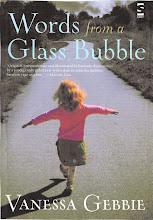
I read first, The Carob Tree from my collection Words from a Glass Bubble. Guaranteed to bring a lump to my throat, even now. So I followed it up with a daft flash entitled Barry Island Double Glazing, hamming up the accent something chronic and getting lots of laughs.

Alison read from Fifteen Tales of Modern Attraction Amazon Link HERE, choosing a story set in a riot in Ikea (fact… the riot happened a few years back...) and has everyone on the edge of their seats as a heavily pregnant shopper had an interesting time.

Lovely to see people I knew in the audience, Jac and James who have joined The Fiction Workhouse recently. Elizabeth Rutherford-Johnson and her husband Tim down from Lunnon, and intrepid follower of this blog and others, faithful supporter of Salt Publishing and the short story form, Pierre L. All the way from Reading.(Good to meet you Pierre! Thank you so much for coming.) And last but by no means least, another contributor to the Salt book, the lovely Sarah Salway. Find her HERE.

But especially lovely to meet Sue Roe again. Sue taught me for one term in 2002, was my very first Creative Writing tutor. It was extra nice to be able to sign a book for her… that was very special. (See her latest book HERE…reviewed on Vulpes Libris– The Private Lives of the Impressionists.)

Big thanks to Sara Crowley– who blogs HERE. She works at Waterstone’s, is a great champion of the short story form, and a talented writing friend too.

Signed a few books, then a bunch of us went off for supper. It was a pleasure to meet novelist Jeff Noon, and to share a tapas meal. He doesn’t like squid, but does like prawns so that was OK. This morning I have bought his Falling Out Of Cars. Jeff Noon HERE on Wikipedia… I must get out more.

Wednesday, 4 March 2009

Warehouse of abandoned books....

Well, I for one will not be looking too closely at the titles on the floor... look at this... the closeure of a warehouse operation that supplied Amazon has led to a free for all as people are invited to take what they want, for nothing.

One side of me says this is good. the other shivers.

DAILY MAIL ARTICLE HERE WITH LOTS OF AWFUL PICCIES. AWFUL IF YOU ARE A WRITER!

Tuesday, 3 March 2009

My Little Writing Comp - Picture prompts... go on... WRITE!


Write a story of less than 500 words, inspired by my photo above.

Story has to be fresh. Only you know if it is. Unstale. And certainly unpublished.

I will send the writer of the best story a copy of my collection, with an additional flash story hand written inside. UNIQUE!

Deadline, April 7th 2009.

Stories to be emailed to me at vgebbie (at) gmail (DOT) com

Monday, 2 March 2009

Competition success

I heard nice news: second prize in a decent comp. Details soon.

SUDDEN INTEREST IN WILLOWS...

What IS going on? I'm suddenly getting a lot of hits going directly to a story posted in November here...linked to an image of a willow tree. Is there a willow fetish sweeping the world?
To make life easier, here's the story again: complete with grammatical errors, and other glitches. This was written in about fifteen mins and is not exactly a masterpiece... it was only posted as I'd been blocked for a while and was glad to be writing.

All explanations about the flurry of interest would be received with gratitude.

There was once a husband and wife who lived on a poor farm, where the soil was thin, and where there were no hills round about to protect it from the winds that blew from the north. The farmer had over the years cut down all the trees on his land for fuel, leaving the fields bare, so that when that wind did blow from the north, it met no obstacles at all, and cut across the grass like it had knives in its teeth.

I say the farmer had cut down all the trees… but that is not quite right. He had a river running along the boundary of his farm, and on the bank this side, he had left some willow trees, believing the wood to be damp and bad for burning, and the branches too spindly to be used for anything much. Besides, the bank was treacherous. And the farmer never wanted to risk his life in the fast flowing waters of the river. So on this side, the willows stood tall. For in those days, the willow had not learned what it was to weep.

On the other side of the river, on the other bank, the trees were poplars. Standing tall and straight, their leaves shimmering in the evening light.

The farmer and his wife had many children. One after another, they had babies, because they would need help on the farm as they grew older. Of course, in those days, and in that country, the babies were taken to be baptised, taken to the river with the village priest in attendance, while they were dipped quickly in the water.

The farmer and his wife had a special net made for this purpose. They would stand with the priest on the solid ground close to the trees, and would put their latest baby in the net. Then they would wait until the priest was intoning the correct prayers, and they would stretch the net out over the field, the bank, right to the river, and they would gently lower their latest child into the flow, and name him.

But for each ceremony, the village priest required payment. He would ask for not only coins, but cloth. Not only cloth but meat. Not only meat but the finest wines that grew on the north facing slopes of the valley.

And so gradually, the farmer and his wife grew poorer and poorer. Not only did they have to pay the priest, but the farm did not repay their hard work. And one by one, not long after their baptism ceremonies – indeed, some versions of this story say because of the baptism ceremonies – the farmer’s babies died and were taken to the village church in small coffins, to be laid in the ground.

It was not long before the farmer and his wife were again expecting another baby.. And not long before they realised, after counting their money on the kitchen table one evening, that they had not enough money left to pay the priest to baptise this child when it came.

The baby was born, and it lived three days, before it too, was taken along the village street to the church to join its brothers and sisters in the earth. But the priest stood at the gate of the cemetery, and barred the way.

“Only those whose souls have names are welcome here,” he said, and he turned the couple away. And they walked home carrying their child in his wooden box. That night, they went in the darkness down to the river carrying their child and the baptism net they had used for all their other babies. And when they were watched by nothing but stars, they took the child from his box, placed him in the net, stretched out the net on its long handle through the willow branches, and down to the water.

They moved the net gently this way and that in the current, feeling the water playing with the burden. They felt the burden shifting, heavy, not heavy, until suddenly, there was no weight at all…. And the two of them turned their backs on the river, and returned home.

The wind blew from the north that night, unhindered. It blew the grass across the fields, leaving bare patches where it tore the grass up by the roots. And when it reached the river, the wind blew the trees until they were almost bent in two.

But the trees would not break. It has been the purpose of trees to guard the souls of the dead since as long as anyone can remember – and for them to break would be to relinquish their reason for being. In the very beginning, each tree was given a different soul to guard. Dark upright fir trees guarded the souls of soldiers fallen in battle. Great oak trees guarded musicians. The aspen guarded the souls of poets. And so on, until poplar trees were chosen to guard the souls of babies who lived less than a week.

The souls of the farmer’s babies played at night high among the leaves of the poplar trees by the river. They looked down at the farmer and his wife and sang, making the same sound as the wind. And when the soul of their little brother appeared on the sand by the river, they reached down their arms to lift him into their tree. But the poplar was only allowed to guard the souls of named babies, and the babies’ arms were not long enough nor were they strong enough to take their unnamed brother into the tree.

Back then the willow had not been told which souls to guard. All souls seemed to have been taken. And back then, the willow tree stood tall and erect, just like the poplar trees.

The soul of the unnamed boy stood on the sand at the foot of the willow tree, and tried to catch its branches as they swayed in the wind. He looked up into the poplar, and saw his brothers looking down at him, the space between too great. Perhaps if he could grasp a branch, he might climb up to join them? But the branches of the willow tree were too high, too erect. They thrashed in the wind out of his reach.

For months, the soul of the unnamed child stayed at the foot of the willow. And each time the north wind blew, he tried to jump and catch a branch, to climb up to join his named brothers. And for months, the heart of the willow tree filled with tears for the child.

Slowly, the warmth of those tears softened the wooden heart of the willow tree, and each time the wind blew, the branches softened, and bent, until they almost reached the ground. The soul of the unnamed child caught hold of the branches, and played … swinging higher and higher as the wind blew. He called out to his named brothers to come down! Come down! Come and play and swing!

But the named brothers high in the poplar tree could not come down. Their place was at the very top of the poplar, close to the clouds.

Soon, the branches of the willow tree were so soft, that they bent right into the river as it flowed at its foot. And the next time the soul of the unnamed child played, it swung its branches out over the river, and dipped the child into the water, then sprang back, lifting him into the air and back onto the sand of the bank.

And as it did so, the willow tree gave the soul a name.

Afterwards, and until this day, the willow tree’s branches have swept the surfaces of rivers. And they guard the souls of unnamed babies who die before they have been on the earth for a week.

And on the opposite river bank, as is often found, there may be poplar trees. And when the wind blows from the north, if you stand close by and listen, you will hear singing.

It is the souls of the named and the unnamed calling across the water to each other, asking each other to come and play.

But they do not know which names to call. For the poplar tree and its souls cannot understand the language of the willow. And the willow cannot understand the language of the poplar.

But it is only the willow whose heart has melted enough to weep for the lack.