Showing posts with label Short Circuit. Show all posts

Monday, 14 December 2009

Short Circuit visits Fiona Joseph


The next stop on the Short Circuit blog tour is the bloghome of Fiona Joseph. HERE Some fantastic questions, which took me a long time to ponder - hence the lateness. Oops, sorry chaps!

Saturday, 24 October 2009

ENDORSEMENTS FLOOD IN FOR 'SHORT CIRCUIT'


An essential read. Short Circuit is a collection of essays from writers who are passionate (and successfully!) about short fiction. A real gold mine of insights and ideas for aspiring writers and for those seeking a refresher.
The Bridport Prize


At last! The definitive guide to writing short stories, put together by a team of experts who are passionate about this most elusive, maddening, beguiling and ultimately satisfying of art forms.
Cleverly constructed - a book which you will want to dip into for years to come. And a book which will do much to raise the status of the short story in contemporary fiction.
Carole Buchan, Asham Trust

Once a lover of the short story opens Short Circuit one quickly realises it is indispensable ... to a degree that has one asking why hasn't it been done before? Like all the best story anthologies the essays and interviews are varied in style and structure and possess all the attractiveness and excitement of good gossip.
Pat Cotter, Frank O’Connor Award
How refreshing to have a book on creative writing that is neither abstract theory nor banal 'how to'. What we have instead are insights into the short story from a marvellous variety of accomplished writers; an invaluable resource for anyone tackling this tricky but highly rewarding literary form.
Paul Munden, Director, National Association of Writers in Education

Here is a ‘How To’ book that is hard to put down. If there is anything you still need to know after reading the varied authors here, you probably haven’t read it properly. Read it again. Not that you’d need to, wisdom and insight hop off the page like light on water.
This book lacks the aridity of a textbook. The writers give of themselves and their experience, and information, advice and insight is fortified with example. Respect is given to the process and to the reader.
There is a mystery at the heart of writing. It’s the experience of characters and stories developing lives of their own; of characters arguing with their author and creator, of stories going places the writer did not know about. It is the marriage of this mystical, that a writer must learn to listen to, and the craft that a writer must learn, that makes fiction sing and dance on the page, and one of the joys of this book is the illumination given to this vital process.
Clem Cairns, founder, the Fish Prize


Vanessa Gebbie has compiled an indispensable guide to crafting the short story. The subjects represented here--all written by contemporary authors--will stimulate advanced writers and instruct newcomers. There's nothing like hearing from people who have learned a technique or a way of approaching a problem through experience. These authors are generous with what they know, to our benefit.

Alice Elliott Dark, Writer in Residence at Rutgers-Newark University author of ‘In the Gloaming’ and ‘Naked to the Waist’.

This is rich book- full of insight and interest. 'Short Circuit' will be a essential addition to my undergraduate book list- it is written by those who have first hand understanding of the problems, as well as invaluable knowledge of the craft of writing short fiction.
Gill Lowe, Senior lecturer in Creative Writing, Ipswich University.
This is a generous book, rich in ideas. It’s a practical book, giving a kick start to the imagination with its suggestions for overcoming the tyranny of the blank page, and it’s also a realistic book. Short Circuit updates Chaucer’s advice about life being short and the craft long to learn, without ever losing sight of why it’s worth the effort.
As a teacher of creative writing, I recommend it to students. I believe in the apprenticeship system and this is an excellent manual. As a writer, it reminds me why I write, and why there’s nothing else I would rather do.

Bridget Whelan, lecturer in Creative Writing, Goldsmith’s College

As full of inspiration as it is of sound advice. An invaluable tool-kit of a book for practitioners and scholars of the short story.

Mike McCormack, lecturer, MA in Creative Writing, NUI Galway.

Thursday, 24 September 2009

WEEKLY POST Sept 24


(Pic:Sunset from Anam Cara.)

Retreat Roundup
I had a wonderful two weeks at Anam Cara Writers’ and Artist’s Retreat. A full fortnight to work hard, focussing on nothing else - plus two days for travel. And lots of good creative company, all under the conductor’s baton of owner Sue Booth-Forbes who among other incarnations has been an editor at Cambridge University Press, and whose input into my writing life is invaluable, always.
Some great company, some fantastically useful conversations. Lots of laughs. Most residents were there for a few days to a week, except Eileen, a Professor of design from Syracuse NY, who is staying for five weeks. I very much enjoyed her company – although we were working on very different projects, we fell into a routine and seemed to have productive days and frustrating days in synch. And many laughs during walks and swims.
Yes, swims. The weather was more than kind- we enjoyed a whole week of unbroken sunshine at one point. It was perfect for walking, and I tried to get out most days. But also perfect for swimming. There is no Gulf Stream on this coastline; it is seriously freeeeeeeezing! But for once, being chubby has its advantages. (!) Once in, I could swim for ages, dead from the neck down. Which is arguably better than dead from the neck up...
There is a lovely beach almost at the end of the peninsular, where we took a picnic lunch one day and swam in clear cold water accompanied a little way out to sea by brilliant white gannets with black wingtips, diving for fish. The crow-like black birds that flew over our heads as we swam were choughs. Please note: The pink blob in the water is meself.


But most days, it was lovely to sink into the Anam Cara routine.
8.30 meet in the kitchen for breakfast – cooked by Sue. Porrige, bacon, waffles, pancakes, duck egg scramble, tomatoes… endless and blissful.
9.30 off to the room to collect the thoughts and start work. I often worked in the grounds.
1.30 lunch all ready in the kitchen. Either collect it and go, or:
2.30 back to work
5.30 technically the end of the working day, but I sometimes carried on or went out for a walk then. Down to the village of Eyeries and on down to the sea, where there are rocks you can sit on, listening to the waves.
7.30 dinner is ready in the kitchen.
.

.

.
.

(Pic: A quick sit-down with Jack the Dog.)

.
.
Work.
So what did I do? I wrote about 15,000 new words including a completely new section of the novel. My wordcount is now over 90,000 words. Really? Yes, really.
I finished rewriting another two sections, added a new character to one section, identified areas of work neeed in others, especially on the voice. I reconfigured, organising sections into three or four separate chapters. I wrote a contents page. That was really useful, for structural considerations...

Subliminal inter-species communication.

One day I wrote poetry. The cows in the fields around us had been calling all night. Both Eileen and I only cat-napped that night, so we discovered at breakfast. And we both had painful dreams about children. It turned out that the cows had their calves taken away the day before.
I wrote a poem and several haiku that morning. My first haiku experience – and it is SO hard to get the right words when you are only allowed seventeen syllables. (Some conventions say a different number. I chose that one.) It was lovely too, to get an email that day from poet Caroline Davies, and to swap some work.

Green and blue cliffs…
One afternoon, needing a change of scene, I drove to Allihies and the copper mines. The new museum is very good, and there is now a marked walk/road to all the mine sites. Allihies is littered with old engine houses, mine shafts, and other relics of the industry. The cliffs still run bright green/blue with malachite in places. I spent hours walking over the hills, visiting the ruins, listening to the wind in what’s left of the mine chimneys.
.
.Two hags...
.
I always make time to visit The Hag. Legend has it that her man went to sea and she promised to wait for him. He never returned, and she is still waiting on the rocks. Another legand says that she was a witch with great powers, who challenged a Christian saint when he arrived to convert the populace. He turned her to stone. Whatever, The Hag of Beara is covered in gifts from women. Coins, ribbons, flowers, fishing lures, messages, coloured stones. Toys. She is also the centre of witchery in these parts. last year when I visited, taking her a coin, there was a half-burned doll at her feet. Blackened plastic face, hair gone... seriously spooky.

Short Circuit, a Guide to the Art of the Short Story
The proofs of ‘my’ forthcoming text book, (due out soon from Salt Publishing) arrived mid-stay. I sent the file to all the contributors to proofread their chapters. Very exciting.

Booking for 2011!

Finally, a week-long short fiction/inspiration workshop has been arranged for May 2011. It will be lovely to teach in this most inspirational of places, with boundless resources right at our fingertips. Places will be limited, and I guess it will be publicised nearer the time.

Bridget Whelan, Bernadette Cremin

An added bonus of my stay was an event on Sunday 20th, one in a series of literary events held at Anam Cara that raise funds for various charities. This was a stop on a publicity tour by novelist Bridget Whelan, together with performance poet Bernadette Cremin. And the fundraising is for the provision of fresh water to a village school in Uganda, which will save the children daily hours of lugging filthy water from a swamp used as a watering hole by cattle and pigs, for drinking washing and cooking. It will save lives, in more ways than one.
.
Talking of water- there is something adrift with the water supply in the area, so we had to draw drinking water from the well in the village for the duration of my stay. The water tastes peaty, and rich. It makes toothpaste taste very odd...
.

.

.
(Pic: Tina Pisco and Sue drawing water, Eyeries village pump)

I came back relaxed, pleased with progress, thankful for creative friends both old and new. Within a couple of hours of arriving back, fellow writers Jo Cannon and Claudia Boers arrived to stay while they attend the Asham Atelier, part of the Small Wonder Festival. Today, Tania Hershman arrives, and tomorrow, Selma Dabbagh. A house full.

Other news
There is actually too much, but for the moment, just this:

Tales of the Decongested

Selma and I are reading tomorrow night at Foyles Charing Cross Road, for Tales of the Decongested. 7.00 pm for anyone who is about and wishes to hear a tale of woe and colonic irrigation…


.
.(All pics by Eileen. Sunset pic edited by me)

Saturday, 13 June 2009

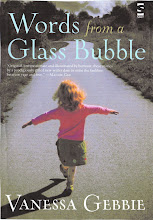
Generous review from Asham for Glass Bubble

I am indebted to the organisers of The Asham Award for their most generous review of Words from a Glass Bubble.

This stunning range of work is not afraid to explore the darker side of human emotion, yet allows us to see the light which often wavers at the end of the bleakest and longest tunnel.

These beautifully written stories are in the best literary tradition, lyrical yet understated.


For the rest of this review and to read what they say about Short Circuit, the forthcoming short story text book from Salt Publishing, see the News section of the Asham Award Website, HERE You can also read up on the finalists of this year's award, and read other news especially about Julia Widdow's novel.

Short Circuit contains a brilliant chapter entitled 'Writing into the Void' from Marian Garvey, last year's winner of the Asham Award for new Women Writers.

I am delighted to say that I have agreed to read for the next Asham Award. What a lovely thing to be asked to do.

Thursday, 14 May 2009

SHORT CIRCUIT A Salt Publishing Guide to the Art of the Short Story

Thanks to the generosity, hard work and passion of the writers and teachers below, the final manuscript of SHORT CIRCUIT finally went to Salt Publishing this week.

It’s taken six months of hard graft, during which it has been well nigh impossible to write much fiction myself… it was as though that side of my brain had closed down. But thankfully, due largely to the buzz of the Fiction Workhouse, I’ve managed to keep some level of creativity up, and hope to return to normal form very soon.

In these pages are generous chapters from some of the strongest writers of short fiction I could find.
In terms of major awards, this team have among others, won the folllowing:
The National Short Story Award, 6 Bridport Prizes, 3 Fish Prizes, 2 Commonwealth Awards, the Asham Award, Pen MacMillan Silver Pen Award, Writers’ inc Writer of the Year.


When you are asked to source the content, contribute yourself, and edit a book like this, it would be easy to close down under the weight of responsibility. Responsibility to Salt, who are just fantastic and dedicated and who are throwing themselves behind this book (born out of a conversation in Cork last year), responsibility to the aspiring writers who may pick up this book in the hope that it will help them on their way… but also a responsibility to myself… I was NOT prepared to fail on this one. Also, I decided not to source all the major chapters from Salt writers, over half had to be with other publishers.

It took a few days of thinking, in a mild state of panic, back in September, when Salt gave me this commission. And I came to the conclusion that the best way to approach the book was to create the book I would have loved to have myself, when I was a relative newbie writer.

I didn’t want to be talked down to. I didn’t want the very basic things you can learn anywhere, fast. I wanted in-depth discussion of the individual craft elements set in context – within a close look at the creative practices of successful writers of short fiction including many very successful teachers of writing.

I did not just want theory (although there is a place for that, and theory can be found in many many places.) I wanted to read chapters from writers prepared to analyse their own working practices, their own creative inspirations.

It is astounding how much generosity these writers have, their willingness to share with each other, their willingness to share with those starting out.

What I have created is the book I’d have loved back then, but also a book I will love now. Where I can find the companionship of other writers sharing their creative thoughts. I will find writing exercises for when I need to stretch myself and try different things. I will find list upon list of inspirational short stories, stories that have planted seeds in the spirits of all these superb writers.

Twenty four writers. In-depth chapters in the form of essays, two interviews with Tobias Hill and Clare Wigfall (that was fun to do - hours on the phone, talking writing with two great people, great writers. What an excuse!) And a buzzy 'epilogue' from six Salt writers.

I know Salt are busy creating the cover, and as soon as that is done, I will upload it here. Meanwhile, thank you to Jen Hamilton-Emery for giving me this project. It’s been exciting, amazing and exhausting!

Below are the contents, with links to the writers.

CONTENTS
Introduction:
Graham Mort: Finding Form in Short Fiction
Clare Wigfall: “I Hear Voices”: Voice and building character
Alison MacLeod: Writing and Risk-Taking
Nuala Ni Chonchuir: Language and Style
Chika Unigwe: Settings. A Sense of Place.
Alex Keegan: Understanding Earthquakes. The Importance of Theme.
Lane Ashfeldt: Building a World
Adam Marek: What my gland wants. Originality in short fiction.
Catherine Smith: Myth and Imagination.
Tobias Hill: Character, dialogue, and much more.
Sarah Salway: Stealing Stories.
Elizabeth Baines: True Story, Real Story – Good Fiction?
Tania Hershman: Art Breathes from Containment
David Gaffney: Get Shorty. The micro-fiction of Etgar Keret.
Marian Garvey: On Intuition. Writing into the Void.
Elaine Chiew: Endings
Paul Magrs: Thoughts on Writing Fiction, at the End of Term
Vanessa Gebbie: i) Leaving the door ajar: Opening the short story
ii) Hard Work, Persistence, Luck and a Bowl of Fruit. The Short Story Competition game.

Epilogue: Some final thoughts:
Linda Cracknell,
Carys Davies,

David Grubb, Zoe King, Matthew Licht, Jay Merrill.