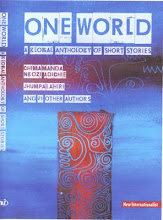
Brilliant news! My publishers, Salt, have won an award at the Independent Publishers' Awards, 2008, in Brighton this weekend.
Go to Words from a Glass Bubble Blog (link on right >>>>>) to check it out!
Monday, 10 March 2008

Saturday, 8 March 2008
MADNESS, GENIUS and MAKING MONEY...HANIF KURESHI on UNIVERSITY CREATIVE WRITING
Elizabth Baines reports this on her excellent blog.
Hanif Kureshi's recent talk at Manchester University, and among other things, his views on Creative Writing at University.
(my breaks in the text)
ELIZABETH BAINES' COMPLETE ARTICLE HERE
From my limited experience, he is spot on about the 'cruelty' of some courses leading students to think they are writing material that will be of interest to the publishing world. But I would probably call it 'cynicism'. After all, as he points out, their objective is to increase income.
But while we are on the subject of cruelty, I think his description of some students of Creative Writing as "absolutely barking" is cruel.
Again, from experience of a university course, but also from the frequent experience of participating in and leading public CW workshops ... people sign up because they want improve their craft, to maximise their chances of being heard. They go to the Universities, to courses, because they believe they will be given the tools with which to create something special.
Sure, they have a captive audience who might have to listen to autobiographical ramblings, and comment on a life in progress.
But if the Universities think what they are writing is 'barking' then surely, these students ought not be ON the courses in the first place.
Two questions:
1)What's the selection process for entry to basic CW courses at University? certificates and diplomas?? (There was no selection for the one I attended for a while...)
2)How many students do you know of who have failed a University CW course?
.
.
Hanif Kureshi's recent talk at Manchester University, and among other things, his views on Creative Writing at University.
The narrator of (Kureshi's) latest novel, Something to Tell You, is a psychoanalyst, and writing as therapy was a strong thread through the evening. The way he told it, he himself took up writing as the best form of therapy...,
..Asked whether he agreed with Will Self's condemnation of the teaching of Creative Writing, Kureishi said that he could see where Self was coming from, there really was something dodgy about it all: what the universities are up to in fact is making money out of the fees, and it would be an utter cruelty to give 'these people' the impression they were likely to get a publishing deal, the point of it all for most of them was therapy ... and some of them in fact were 'absolutely barking' - in fact he's noticed that when you get these shootings in American universities the perpetrators always turn out to be students of Creative Writing.
But then after all it's true that madness is close to genius and all great writers really have to be mad - at which point the audience laughter turned from nervous to relieved.
(my breaks in the text)
ELIZABETH BAINES' COMPLETE ARTICLE HERE
From my limited experience, he is spot on about the 'cruelty' of some courses leading students to think they are writing material that will be of interest to the publishing world. But I would probably call it 'cynicism'. After all, as he points out, their objective is to increase income.
But while we are on the subject of cruelty, I think his description of some students of Creative Writing as "absolutely barking" is cruel.
Again, from experience of a university course, but also from the frequent experience of participating in and leading public CW workshops ... people sign up because they want improve their craft, to maximise their chances of being heard. They go to the Universities, to courses, because they believe they will be given the tools with which to create something special.
Sure, they have a captive audience who might have to listen to autobiographical ramblings, and comment on a life in progress.
But if the Universities think what they are writing is 'barking' then surely, these students ought not be ON the courses in the first place.
Two questions:
1)What's the selection process for entry to basic CW courses at University? certificates and diplomas?? (There was no selection for the one I attended for a while...)
2)How many students do you know of who have failed a University CW course?
.
.
Friday, 7 March 2008
On the Bus with Brighton College
Last Thursday, and four hours spent with bright, buzzy, keen Lower Sixth Brighton College Creative Writers. Add a teacher who says 'There's a bus to Mileoak...' and V is off!
I sent in advance a suitable short story written a while back, not by me, set on a bus. A bus journey back though a life, revisiting relationships, with more than a little element of the surreal.
We didn't tell the students what was planned.
Initially, we plunged straight into a flash writing exercise, with words dropped in at random as they wrote... and as it always does, it produced some good work.
We talked about journeys being great structures for stories, for films. The Oddysey. Lord of the Rings ad inf.
Then we sprang the surprise, that we were off on the bus! And for the next hour and a half at least, the CW session was held on the top of the Number 1 to Mileoak.
We caught the bus outside the College. Each student was asked to sit apart from the rest... and to be observant, feeling the difference between images and sounds that jumped out at them, as opposed to the things that flashed past and didn't 'mean' something.
And we watched the passage of life outside and inside the bus.
To begin with, we were all 'aware' of the necessity to notice things. Trying to notice clever things, not mundane. But slowly, the soporific nature of public transport journeys took over, and the things we were seeing began to blur... but some jumped into focus. Lists were kept. Anything that seemed significant. A child glimpsed in a sandpit. A slipped tile on a roof. A frightened man on a mobile. A woman pushing a buggy over a road.
I was trying to illustrate that stories find the writer, not the other way round.
And the results were very good. For example: one student was so moved by a sequence of tiny events he saw outside a newsagent's. (I won't repeat them here... they are his...) that his voice shook when he described them to us later.
"When should I write this? I want to write it now..." and we were able to talk about not grabbing stories too fast, but the value of waiting and letting the mind do some of the work without us 'interfering' too much.
He'd find, on his list of seeming unconnected sights, that some held more significance than others. More potential links to the woman outside the shop...
They wrote sequences of 'characters' seen, lines of poetry linking sights to emotion. Shared their observations. Said they had changed the way they 'see' things. They were beginning to 'see' as writers. Fabulous!
Very buzzy. very exciting. A privilege to work with this group.
Reading back over, I haven't done the bus journey justice.
I sent in advance a suitable short story written a while back, not by me, set on a bus. A bus journey back though a life, revisiting relationships, with more than a little element of the surreal.
We didn't tell the students what was planned.
Initially, we plunged straight into a flash writing exercise, with words dropped in at random as they wrote... and as it always does, it produced some good work.
We talked about journeys being great structures for stories, for films. The Oddysey. Lord of the Rings ad inf.
Then we sprang the surprise, that we were off on the bus! And for the next hour and a half at least, the CW session was held on the top of the Number 1 to Mileoak.
We caught the bus outside the College. Each student was asked to sit apart from the rest... and to be observant, feeling the difference between images and sounds that jumped out at them, as opposed to the things that flashed past and didn't 'mean' something.
And we watched the passage of life outside and inside the bus.
To begin with, we were all 'aware' of the necessity to notice things. Trying to notice clever things, not mundane. But slowly, the soporific nature of public transport journeys took over, and the things we were seeing began to blur... but some jumped into focus. Lists were kept. Anything that seemed significant. A child glimpsed in a sandpit. A slipped tile on a roof. A frightened man on a mobile. A woman pushing a buggy over a road.
I was trying to illustrate that stories find the writer, not the other way round.
And the results were very good. For example: one student was so moved by a sequence of tiny events he saw outside a newsagent's. (I won't repeat them here... they are his...) that his voice shook when he described them to us later.
"When should I write this? I want to write it now..." and we were able to talk about not grabbing stories too fast, but the value of waiting and letting the mind do some of the work without us 'interfering' too much.
He'd find, on his list of seeming unconnected sights, that some held more significance than others. More potential links to the woman outside the shop...
They wrote sequences of 'characters' seen, lines of poetry linking sights to emotion. Shared their observations. Said they had changed the way they 'see' things. They were beginning to 'see' as writers. Fabulous!
Very buzzy. very exciting. A privilege to work with this group.
Reading back over, I haven't done the bus journey justice.
Thursday, 6 March 2008
REVIEWED BY ADELE GERAS
Words from a Glass Bubble has been reviewed by Adele Geras today on her husband (Norman Geras)'s blog, Normblog.
(I love Normblog. There is always something to provoke, to challenge, to make me think...)
Adele Geras reviews two Salt Collections: Balancing on the Edge of the World, by Elizabeth Baines, and Glass Bubble.
She writes a very good introduction in which she champions the short story.Here is her article in its entirety:
Two short story collections (by Adèle Geras)
Salt is an independent publisher based in Cambridge and it specializes in short stories. I've read two collections by Salt authors recently: Elizabeth Baines's Balancing on the Edge of the World when it came out a couple of months ago, and - the other day - Vanessa Gebbie's Words from a Glass Bubble, to be launched next week.
Some people simply don't like reading short stories and I find this so inexplicable that every so often I'll try my powers of persuasion to win the form a few more readers. Publishers (though not Salt, obviously) think that collections are not a paying proposition and efforts to bind them up individually as tiny little booklets and sell them at railway stations and the like don't seem to have flourished. They crop up less and less frequently in magazines. The broadsheets will carry a story by a superstar writer at Christmas, and occasionally at Halloween, because ghost stories, at least, are perennial favourites. Val McDermid tried her hardest a couple of years ago to get short stories noticed with a superb website and perhaps the internet is part of the future of this genre. But collections like these two show that the form is still alive and well in its printed version.
Those who don't like short stories are disappointed, perhaps, because they expect them to be small novels and they're not. It's like wishing a truly delicious canapé, or an exquisite strawberry tart, were a three-course meal. That isn't going to happen. With a few exceptions, short stories are short - over in a few pages for the most part - and therefore you'd think ideal for journeys, waiting rooms, the time before you fall asleep and any small time slot when getting stuck into a novel means you won't get further than the next few pages and have to leave it hanging till a later time.
Stories, when they work (and in the hands of these two writers they do work), offer us a chance to look into someone else's life. They can throw a stone into our mind that keeps rippling out to the edges of our thoughts all day long. That, I think, is what the blurbese 'haunting' means: you are literally pursued by the story you've just read, as if by a particularly vivid dream. They can terrify you (M.R. James, Franz Kafka), make you laugh (Damon Runyon), and even bring to life, however briefly, a whole distinct world (Katherine Mansfield, Anton Chekhov). They can be extended jokes, or delicious bits of scandal, or an overheard conversation. There are stories to suit every taste.
Elizabeth Baines's speciality is unpacking relationships. She catches perfectly the embarrassment, rivalry, squabbling, envy and love that exist between parents and children and between siblings. 'The Way to Behave' has a wronged wife going to speak to her husband's mistress. Baines is wincingly funny about the creative process and 'The Shooting Script' ought to be required reading for anyone who fancies themselves writing for television. She's both lyrical and clear-sighted when she looks at the world through a child's eyes. Try the stories 'Power' and 'Daniel Smith disappears off the face of the earth'. She moves between the city and the countryside and her internal monologues sound genuine, which isn't a surprise as Baines is a prize-winning playwright. Many of these tales would make good short dramas and perhaps that's one way of approaching them. The difference between drama and stories, though, is this: you have to provide the setting, costume and props in words and Baines does this with enormous aplomb.
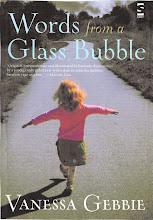
The cover image on Vanessa Gebbie's book (which shows the back view of a beautiful red-haired girl going along a road and which reminds me of the Clark's shoe advertisements from the 50s) is an ironic comment on the contents of the book. The stories here are often heart-breaking. The death of children is a recurring theme and tales like 'I can squash the king, Tommo' (with its deliberate echoes of 'Under Milk Wood') are hard to read with dry eyes. Gebbie is never sentimental and the grief felt by her protagonists is brilliantly described. The ordinariness of pain: the way you settle into it, the way you face what's dished out to you, the way you cope, are examined in language that's plain and even brutal when it needs to be, and tender and poetic when that's appropriate. Some of the stories are set in Wales; the seaside is the background for some others. There's a story about an Inuit child which is desperately sad, but still uplifting. Harry in 'Harry's Catch' - which dwells in some detail on the technicalities of fishing - faces the truth about his marriage for the first time. A lowly employee at a hotel works out who wears the shoes he polishes, and in my favourite story, 'Dodie's Gift', you get an entire thriller plot played out in ten pages. It's terrific stuff: wide-ranging, interesting and, like the Baines, very well-written.
I do urge anyone who loves short stories to read these two collections and help me spread the word. (Adèle Geras)
(I love Normblog. There is always something to provoke, to challenge, to make me think...)
Adele Geras reviews two Salt Collections: Balancing on the Edge of the World, by Elizabeth Baines, and Glass Bubble.
She writes a very good introduction in which she champions the short story.Here is her article in its entirety:
Two short story collections (by Adèle Geras)
Salt is an independent publisher based in Cambridge and it specializes in short stories. I've read two collections by Salt authors recently: Elizabeth Baines's Balancing on the Edge of the World when it came out a couple of months ago, and - the other day - Vanessa Gebbie's Words from a Glass Bubble, to be launched next week.
Some people simply don't like reading short stories and I find this so inexplicable that every so often I'll try my powers of persuasion to win the form a few more readers. Publishers (though not Salt, obviously) think that collections are not a paying proposition and efforts to bind them up individually as tiny little booklets and sell them at railway stations and the like don't seem to have flourished. They crop up less and less frequently in magazines. The broadsheets will carry a story by a superstar writer at Christmas, and occasionally at Halloween, because ghost stories, at least, are perennial favourites. Val McDermid tried her hardest a couple of years ago to get short stories noticed with a superb website and perhaps the internet is part of the future of this genre. But collections like these two show that the form is still alive and well in its printed version.
Those who don't like short stories are disappointed, perhaps, because they expect them to be small novels and they're not. It's like wishing a truly delicious canapé, or an exquisite strawberry tart, were a three-course meal. That isn't going to happen. With a few exceptions, short stories are short - over in a few pages for the most part - and therefore you'd think ideal for journeys, waiting rooms, the time before you fall asleep and any small time slot when getting stuck into a novel means you won't get further than the next few pages and have to leave it hanging till a later time.
Stories, when they work (and in the hands of these two writers they do work), offer us a chance to look into someone else's life. They can throw a stone into our mind that keeps rippling out to the edges of our thoughts all day long. That, I think, is what the blurbese 'haunting' means: you are literally pursued by the story you've just read, as if by a particularly vivid dream. They can terrify you (M.R. James, Franz Kafka), make you laugh (Damon Runyon), and even bring to life, however briefly, a whole distinct world (Katherine Mansfield, Anton Chekhov). They can be extended jokes, or delicious bits of scandal, or an overheard conversation. There are stories to suit every taste.
Elizabeth Baines's speciality is unpacking relationships. She catches perfectly the embarrassment, rivalry, squabbling, envy and love that exist between parents and children and between siblings. 'The Way to Behave' has a wronged wife going to speak to her husband's mistress. Baines is wincingly funny about the creative process and 'The Shooting Script' ought to be required reading for anyone who fancies themselves writing for television. She's both lyrical and clear-sighted when she looks at the world through a child's eyes. Try the stories 'Power' and 'Daniel Smith disappears off the face of the earth'. She moves between the city and the countryside and her internal monologues sound genuine, which isn't a surprise as Baines is a prize-winning playwright. Many of these tales would make good short dramas and perhaps that's one way of approaching them. The difference between drama and stories, though, is this: you have to provide the setting, costume and props in words and Baines does this with enormous aplomb.
The cover image on Vanessa Gebbie's book (which shows the back view of a beautiful red-haired girl going along a road and which reminds me of the Clark's shoe advertisements from the 50s) is an ironic comment on the contents of the book. The stories here are often heart-breaking. The death of children is a recurring theme and tales like 'I can squash the king, Tommo' (with its deliberate echoes of 'Under Milk Wood') are hard to read with dry eyes. Gebbie is never sentimental and the grief felt by her protagonists is brilliantly described. The ordinariness of pain: the way you settle into it, the way you face what's dished out to you, the way you cope, are examined in language that's plain and even brutal when it needs to be, and tender and poetic when that's appropriate. Some of the stories are set in Wales; the seaside is the background for some others. There's a story about an Inuit child which is desperately sad, but still uplifting. Harry in 'Harry's Catch' - which dwells in some detail on the technicalities of fishing - faces the truth about his marriage for the first time. A lowly employee at a hotel works out who wears the shoes he polishes, and in my favourite story, 'Dodie's Gift', you get an entire thriller plot played out in ten pages. It's terrific stuff: wide-ranging, interesting and, like the Baines, very well-written.
I do urge anyone who loves short stories to read these two collections and help me spread the word. (Adèle Geras)
Wednesday, 5 March 2008
JUDGING at FISH

I've been invited to judge the 2008 Fish Publishing One Page Story Competition.
FOR DETAILS CLICK HERE
Needless to say I am delighted, and honoured. This is a great competition, attracts over a thousand entries per year from all over the English-speaking world.
I am looking forward to this one.
FISH PUBLISHING WEBSITE: ALL THEIR COMPETITION DETAILS HERE
Monday, 3 March 2008
MORE ABOUT CENSORSHIP
Is there an unalienable human right that goes something like this: “I hold this truth to be self evident: That I have the right not to be offended.”?
Jeez. I hope not.
Recently, I posted something that caused a flurry of angry comments. “Look back in ten years and you’ll see how insensitive this post is…” someone lectured.
The commenters, (all anon, of course) had been offended, and were taking the stance that their rights had been violated in some way.
But we do not, and should not have such a ‘right’.
We are perilously close to enshrining such a right in law, aren’t we? Maybe we already have. But can someone tell me how it will work?
You and yours are offended by something I do or say (or write…). So I am prevented from doing/saying/writing. Thus, I become the offended party, as I feel deep offence that my freedom of speech has been denied.
It’s a nonsense.
Rowan William’s recent foray into the limelight seemed to be based on the belief that everyone has the right not to be offended.
ROWAN WILLIAMS ARTICLE HERE
and it’s not new. The theatre, literature, art, music… have all at one time or another, in places not that far from home, been censored for “causing people to be offended.”
CHANNEL 4 WRITE-UP HERE
The above article cites examples of plays being taken off the stage because sections of the community were offended by the subject matter.
In last year's National Short Story Prize, one of the shortlist was not broadcast by the BBC in case it offended some listeners.
Well I am offended that we were not allowed to make up our own minds whether to turn the radio off.
I am offended that we were not allowed to make up our own minds whether to purchase a theatre ticket.
And I am deeply offended that we are approaching, it appears, a time when not only the authorities, but other writers and artists move to censor each other.
.
Jeez. I hope not.
Recently, I posted something that caused a flurry of angry comments. “Look back in ten years and you’ll see how insensitive this post is…” someone lectured.
The commenters, (all anon, of course) had been offended, and were taking the stance that their rights had been violated in some way.
But we do not, and should not have such a ‘right’.
We are perilously close to enshrining such a right in law, aren’t we? Maybe we already have. But can someone tell me how it will work?
You and yours are offended by something I do or say (or write…). So I am prevented from doing/saying/writing. Thus, I become the offended party, as I feel deep offence that my freedom of speech has been denied.
It’s a nonsense.
Rowan William’s recent foray into the limelight seemed to be based on the belief that everyone has the right not to be offended.
ROWAN WILLIAMS ARTICLE HERE
and it’s not new. The theatre, literature, art, music… have all at one time or another, in places not that far from home, been censored for “causing people to be offended.”
CHANNEL 4 WRITE-UP HERE
The above article cites examples of plays being taken off the stage because sections of the community were offended by the subject matter.
In last year's National Short Story Prize, one of the shortlist was not broadcast by the BBC in case it offended some listeners.
Well I am offended that we were not allowed to make up our own minds whether to turn the radio off.
I am offended that we were not allowed to make up our own minds whether to purchase a theatre ticket.
And I am deeply offended that we are approaching, it appears, a time when not only the authorities, but other writers and artists move to censor each other.
.
Saturday, 1 March 2008
FICTION WORKHOUSE CELEBRATIONS
There's always something going on in the Fiction Workhouse, and that's great.
But in the last few days it's been busy, champers corks popping everywhere:
The CIRCLE PRIZE
Congrats to Joel Willans who finds himself with no less than three pieces on the shortlist!
ECLECTICA, a rigorous and brilliant ezine (one of the originals) have agreed to take a special project selection.
Working from image, (a collage)some 11/12 writers wrote flash pieces. Eclectica indicated interest, then looked at all the work (submitted anonymously). They chose their top three pieces for publication alongside the collage.
So: Congrats to Beverly Jackson (Artist AND chosen writer)
and to Michelle Tandoc-Pichereau,
and to Anna Britten.
FLASHQUAKE ezine have two Fiction Workhouse pieces up together.
Congrats to Sara Crowley (in Fiction section)
and again, to Michelle Tandoc-Pichereau (in Poetry section)
PER CONTRA
Per Contra announced finalists and winner yesterday of this year's prize.
CONGRATS to Beverly Jackson (again!)
to Elaine Chiew
and me.
But in the last few days it's been busy, champers corks popping everywhere:
The CIRCLE PRIZE
Congrats to Joel Willans who finds himself with no less than three pieces on the shortlist!
ECLECTICA, a rigorous and brilliant ezine (one of the originals) have agreed to take a special project selection.
Working from image, (a collage)some 11/12 writers wrote flash pieces. Eclectica indicated interest, then looked at all the work (submitted anonymously). They chose their top three pieces for publication alongside the collage.
So: Congrats to Beverly Jackson (Artist AND chosen writer)
and to Michelle Tandoc-Pichereau,
and to Anna Britten.
FLASHQUAKE ezine have two Fiction Workhouse pieces up together.
Congrats to Sara Crowley (in Fiction section)
and again, to Michelle Tandoc-Pichereau (in Poetry section)
PER CONTRA
Per Contra announced finalists and winner yesterday of this year's prize.
CONGRATS to Beverly Jackson (again!)
to Elaine Chiew
and me.
Subscribe to:
Posts (Atom)



.JPG)