Showing posts with label Salt Publishing. Show all posts

Sunday, 28 February 2010

WINNERS OF THE SCOTT PRIZE...


Salt Publishing have announced the four winners of their inaugural Scott Prize for short story collections.
And they are:
Patrick Holland (Australia): The Source of Sound
David Mullins (US): Longing to Love You
Suzannah Rickards (UK): Hot Kitchen Snow
Tom Vowler (UK): They May Not Mean To But They Do

Many many congratulations to all of them, but especially to the two friends on the list - Tom and Susannah, whose books will be simply stunning.

For a link to Tom's blog, please scroll down on the right here...

Friday, 8 January 2010

SALT PUBLISHING - SCOTT PRIZE SHORTLIST


This from Salt's blog:
The shortlist is announced of the inaugural Scott Prize for Short Fiction, an important new venture for Salt as we continue to discover and nurture new talent from around the English-speaking world. The prize forms part of Salt’s commitment to the short story, to debut collections and to our vision of new literature in English as an international endeavour.
From almost a hundred entries and a longlist of 25, 12 full-length collections have been selected and from these, 4 winning titles will be announced next month for publication in the summer. The standard of entries was incredibly high, with authors spanning the spectrum of writing styles and a fascinating range of subject matter. Reading them was a daunting but most enjoyable task; whittling them down to a shortlist almost impossible. However, we are delighted with the outcome, as follows:

1. Ben Cheetham: The Hate Club (UK)
2. Alexandra Fox: Roundabouts (UK)
3. Miriam Hastings: Demon Lovers (UK)
4. Patrick Holland: The Source of Sound (Australia)
5. Sandra Jensen: A Sort of Walking Miracle (Ireland)
6. Laurence Klavan: Family Unit and Other Fantasies (US)
7. Wes Lee: This Animal Kingdom and Other Stories (NZ)
8. Mary McClusky: Gift to the Dark Gods (UK)
9. David Philip Mullins: Longing to Love You (US)
10. Susannah Rickards: Hot Kitchen Snow and Other Stories (UK)
11. Tom Vowler: They May Not Mean To But They Do (UK)
12. Joel Willans: Buy Ma Biscuits or Kiss Ma Fish (UK)


Many congratulations to you all and best of luck as you go through to the next round.


Particular congrats to writers I've worked with at one time or another - Joel Willans, Tom Vowler (blog linked on right somewhere), Susannah Rickards and Ben Cheetham from the old Fiction Workhouse - and Alexandra Fox from my days at Boot Camp.

Monday, 14 December 2009

SALT PUBLISHING's TOP 20 BEST SELLERS THIS CHRISTMAS - SO FAR .. .. ..


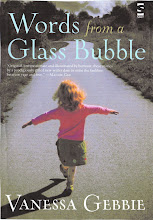
Nice Chrismas pressies all round. Both Short Circuit and Words from a Glass Bubble are in the Salt Publishing Top 20. Yippee iy ay or summat. And it's a real party of good friends too - There's Tania and Elizabeth (with two entries!) and Nuala. Fab.

Here is the list, from front page of Salt Publishing's website, and links to the books, for those last minute extra Chrissie pressies you know you want to give - or get!! (My choices are the Shop Girl Diaries, and Contourlines (see below!). Both of which I will get tomorrow - as Emily is coming to the Ride the Word event, and Jen is hopefully bringing down Contourlines for me.

1. Emily Benet, Shop Girl Diaries
2. Neil Wenborn & M.E.J. Hughes (eds), Contourlines
3. Vanessa Gebbie (ed), Short Circuit
4. Chris Agee, Next to Nothing
5. Siân Hughes, The Missing
6. Elizabeth Baines, Too Many Magpies
7. Tony Williams, The Corner of Arundel Lane and Charles Street
8. Jasmine Donahaye, Self-Portrait as Ruth
9. Paul Magrs, Twelve Stories
10. Karen Annesen, How to Fall
11. Anthoy Joseph, Bird Head Son
12. Tania Hershman, The White Road and Other Stories
13. Nuala Ní Chonchúir, Nude
14. Olivia Cole, Restricted View
15. Eleanor Rees, Eliza and the Bear
16. Luke Kennard, The Migraine Hotel
17. Elizabeth Baines, Balancing on the Edge of the World
18. Vanessa Gebbie, Words from a Glass Bubble
19. Shaindel Beers, A Brief History of Time
20. Tom Chivers, How to Build a City

Friday, 6 November 2009

It's TRUE!!!!! Everyone at Salt Publishing is MAD.

SEND IN THE MEN IN WHITE COATS....
Finally, I can reveal the exclusive news that everyone at Salt Publishing is totally mad. I have sent the truck to pick them up, but check out THIS TOUCHY-FEELY EXPERIENCE before the truck gets there and carts them all off to the Asylum for the Utterly Bewildered. SEND IN THE NICE NEW UNIFORMS..
Short Circuit is back from the printers... YESSSSSSSSSSSSSSSSSSSSSSSSSSSSSSSSS!!!
And I bet you don't get THAT SORT OF THING from ordinary publishers. Oh no.
Bring back the waxed moustache, the corset and the hyper-gusset. And stop having FUN. This is a TEXT BOOK. It is NOT FUNNY. And certainly NOT TO BE ENJOYED. Writing short fiction is a dry, serious, painful passtime. You do NOT enjoy learning to write short stories. STOP NOW.

(If you insist on finding out more, you could click on THIS LINK to the publisher's SHORT CIRCUIT webpage, but you'll have to put up with a gigiantic and irrelevant photo of the Editor.)

Tuesday, 27 October 2009

NUDE NOT NAKED

I wonder - if I just put 'Nude' up there, will the number of hits rocket? Funny little men in villages across the country playing havoc with the National Grid? But no! This is Nuala Ni Chonchuir's collection, Nude Salt Modern Fiction), and I am delighted to welcome her for the latest leg on her round-the-world tour. I'm meant to have three questions. Erm. I sneaked in a few more!
MOI: Hi Nuala. I am struck again and again by your use of language. Unsurprising perhaps, for a poet, and for someone who is avowedly 'in love with words'. A few examples that pleased me hugely:
"I've sat at my window all morning, staring at the untrustworthy spring sunshine hovering over the boulevard..."
"Monsieur Boucher wears a green banyan; his toes scallop from the bottom of the robe, and they are long, like a monkey's." (both from 'Mademoiselle O'Murphy')
and:
"She pushed her head back into the pillow and I looked up at the steeple of her nose, the wide church of her mouth and chin..." (from 'In Seed Time, Learn')
There are words that are perfectly poised - ('untrustworthy' sunshine, 'hovering' over the boulevard - his toes 'scallop', and references to the face of a lover drawn from religious architecture - 'steeple', 'church'... lending this particular scene a hallowed feel)
All these examples are unusually placed and yet perfectly right, in context. I get the feeling that in the hands of a lesser writer, these small miracles would fall flat. Tell me:
1) Are you conscious of this skill as you write? How do these words arrive on the page? Can you describe the process?
2) Is it something that might be learned - so that a keen-eyed writer can achieve a similar effect by astute editing?
NUALA: Gosh, that’s so hard to answer. I honestly can’t analyse where the words and sentences and images spring from. To paraphrase poet Michael Longley, if I did, I’d go there.
I think maybe a feel for putting words together in fresh ways springs from reading. I’ve been a hungry reader all my life and I’ve loved literary fiction since I was very young, so admiration of good writing has formed my own work, I think. I admire vibrant language in other people’s work and it always pleases me when it falls from my own pen. And that’s what happens – I don’t force this stuff out, it’s definitely an unconscious thing.
Incidentally, I was told in a master-class to ditch that sentence “I looked up at the steeple of her nose, the wide church of her mouth and chin..." One participant said it was over the top. She didn’t seem to like me much in general, so that was my cue to keep it. Anyway, I liked it so it stayed. An example maybe of knowing which of one’s darlings not to kill.
To answer the second part of your question, I don’t think it can be learned in any formal sense but writers can freshen their imagery and word choices in stuff they have written if it feels tired on a re-read.
I do think if you want to be a good writer you have to love reading, almost to the point of obsession. And you have to be able to read critically and learn from what good writers do.


MOI: So what reading do you really love to do? Who are your favourite poets? No - I will rephrase that. IF you could keep a single book of poetry in your possession, in the knowledge that you could not look at another for five years... which would you keep? And fiction book? (It does not have to be short stories!)

NUALA: Well, I came to Sharon Olds late (just last year, in fact) but she re-affirms for me the fact that women's sexuality needs to be aired in poetry and fiction. She makes me feel brave in my own writing.
And Baricco's prose is so elegant, spare and yet adorned that I strive to write as beautifully as him. I'd love to write a fairytaley story, like Silk, that people would remember for a long time. That book has a cult-like status among its fans but it's a real love it or hate it read, I find.


MOI: ‘The Blonde Odalisque’ by Francois Boucher was presumably the inspiration for Lousia in Mademoiselle O'Murphy. (I Googled!) Which came first, the idea for the story or you seeing the painting? And which painting, if any, inspired 'Juno Out Of Yellow'?
NUALA: It's basically the same painting, but the orignal one is called Mademoiselle O'Murphy. So yes, that's right. She was a real Irish girl who was Louis XV's concubine - the story is basically true. I've just given her a personality.
It was hearing about Louisa that inspired me first off - I searched for the painting then.
'Juno Out of Yellow' is a fictitious painting. I read about a girl having her portrait done by Nick Miller - she wondered in her article if it was vain to love a portrait of herself. That was my jumping off point.

MOI: Tell me what is feel like to have a growing shelf of books out there? Does each one feel as special as the first? Do you keep a special shelf for your own books and antholgies you appear in?
NUALA: It feels great to have five books under my belt and more on the way. The first one felt surreal and lovely but I'm most proud of the latest one, Nude - it just seems to me a maturer work and the stories fit together well.
I store my books on a shelf in my study - it makes them easy to find when I have to get them out for readings.
The anthologies and journals are all over the house. I keep most of them but some I give away.

MOI: Describe the room you write in. And if you eat when you write, what do you eat?!

NUALA: I have a study with yellow walls, a noticeboard, a filing cabinet and shelves of books. It's a ghost room at the moment because there is nowhere to put the baby in there while I write. So I've moved my desk to the sitting-room now and she sits in her little chair and I can talk to her while I work. Try to work.
I eat cereal bars and spelt muffins and drink decaf tea. That makes me sound saintly but I have been on a health kick for the last few years. I do love dark choc and the odd gallon of red wine. But I don't drink-n-write.

MOI: oooh that’s interesting... the 'no drink n write' thing. Have you never ever ever written summat after a party... something you don’t remember writing at all, but which was brilliant?!
NUALA: I wrote a story while under the influence years ago - it won the first story comp I ever won! After being edited, naturally. It's not brilliant though...If I make drunken notes they usually make no sense whatsoever the next day.

MOI: Nude is a very special book -I much enjoyed your stories! I can understand your pride in it. Not only a beautiful book inside, but such a gorgeous cover design. How did that come about? Was it the first design?
NUALA: Salt were very busy when my cover needed doing so they said if I had an image in mind they'd be open to seeing if it would work, to save them sourcing one. So I trawled the internet and, eventually, the handcrafted yummy-stuff site Etsy for a suitable nude. There I found Rachel Manconi's beautiful images for sale so I made her an offer on one pic and she said yes. Chris was happy with it so he used it. I love it!

MOI: And finally, what are you working on now? I know your novel comes out later... amazing lady that you are. After that???
NUALA: I am working on my next full collection of poetry which will be out November 2010 from Templar Poetry. I have a pamphlet coming out with them this November: Portrait of the Artist with a Red Car. Busy busy.
Thanks a million, Vanessa, for having me on this the penultimate stop of my tour & for supersonic questions. For my last stop I am back in the Antipodes, in Australia (see, a REAL round the world tour!) with Sylvia Petter AKA Merc at http://mercsworld.blogspot.com/


MOI: It is a great pleasure, N. One day, I will explain to the readers just how helpful you were over this stop on your tour. I look forward to reading the next, at Merc's place. And good luck with all your projects!
Nuala's website is HERE and Nude can be bought from all the usual suspects, including Salt Publishing, from their website HERE

Thursday, 24 September 2009

WEEKLY POST Sept 24


(Pic:Sunset from Anam Cara.)

Retreat Roundup
I had a wonderful two weeks at Anam Cara Writers’ and Artist’s Retreat. A full fortnight to work hard, focussing on nothing else - plus two days for travel. And lots of good creative company, all under the conductor’s baton of owner Sue Booth-Forbes who among other incarnations has been an editor at Cambridge University Press, and whose input into my writing life is invaluable, always.
Some great company, some fantastically useful conversations. Lots of laughs. Most residents were there for a few days to a week, except Eileen, a Professor of design from Syracuse NY, who is staying for five weeks. I very much enjoyed her company – although we were working on very different projects, we fell into a routine and seemed to have productive days and frustrating days in synch. And many laughs during walks and swims.
Yes, swims. The weather was more than kind- we enjoyed a whole week of unbroken sunshine at one point. It was perfect for walking, and I tried to get out most days. But also perfect for swimming. There is no Gulf Stream on this coastline; it is seriously freeeeeeeezing! But for once, being chubby has its advantages. (!) Once in, I could swim for ages, dead from the neck down. Which is arguably better than dead from the neck up...
There is a lovely beach almost at the end of the peninsular, where we took a picnic lunch one day and swam in clear cold water accompanied a little way out to sea by brilliant white gannets with black wingtips, diving for fish. The crow-like black birds that flew over our heads as we swam were choughs. Please note: The pink blob in the water is meself.


But most days, it was lovely to sink into the Anam Cara routine.
8.30 meet in the kitchen for breakfast – cooked by Sue. Porrige, bacon, waffles, pancakes, duck egg scramble, tomatoes… endless and blissful.
9.30 off to the room to collect the thoughts and start work. I often worked in the grounds.
1.30 lunch all ready in the kitchen. Either collect it and go, or:
2.30 back to work
5.30 technically the end of the working day, but I sometimes carried on or went out for a walk then. Down to the village of Eyeries and on down to the sea, where there are rocks you can sit on, listening to the waves.
7.30 dinner is ready in the kitchen.
.

.

.
.

(Pic: A quick sit-down with Jack the Dog.)

.
.
Work.
So what did I do? I wrote about 15,000 new words including a completely new section of the novel. My wordcount is now over 90,000 words. Really? Yes, really.
I finished rewriting another two sections, added a new character to one section, identified areas of work neeed in others, especially on the voice. I reconfigured, organising sections into three or four separate chapters. I wrote a contents page. That was really useful, for structural considerations...

Subliminal inter-species communication.

One day I wrote poetry. The cows in the fields around us had been calling all night. Both Eileen and I only cat-napped that night, so we discovered at breakfast. And we both had painful dreams about children. It turned out that the cows had their calves taken away the day before.
I wrote a poem and several haiku that morning. My first haiku experience – and it is SO hard to get the right words when you are only allowed seventeen syllables. (Some conventions say a different number. I chose that one.) It was lovely too, to get an email that day from poet Caroline Davies, and to swap some work.

Green and blue cliffs…
One afternoon, needing a change of scene, I drove to Allihies and the copper mines. The new museum is very good, and there is now a marked walk/road to all the mine sites. Allihies is littered with old engine houses, mine shafts, and other relics of the industry. The cliffs still run bright green/blue with malachite in places. I spent hours walking over the hills, visiting the ruins, listening to the wind in what’s left of the mine chimneys.
.
.Two hags...
.
I always make time to visit The Hag. Legend has it that her man went to sea and she promised to wait for him. He never returned, and she is still waiting on the rocks. Another legand says that she was a witch with great powers, who challenged a Christian saint when he arrived to convert the populace. He turned her to stone. Whatever, The Hag of Beara is covered in gifts from women. Coins, ribbons, flowers, fishing lures, messages, coloured stones. Toys. She is also the centre of witchery in these parts. last year when I visited, taking her a coin, there was a half-burned doll at her feet. Blackened plastic face, hair gone... seriously spooky.

Short Circuit, a Guide to the Art of the Short Story
The proofs of ‘my’ forthcoming text book, (due out soon from Salt Publishing) arrived mid-stay. I sent the file to all the contributors to proofread their chapters. Very exciting.

Booking for 2011!

Finally, a week-long short fiction/inspiration workshop has been arranged for May 2011. It will be lovely to teach in this most inspirational of places, with boundless resources right at our fingertips. Places will be limited, and I guess it will be publicised nearer the time.

Bridget Whelan, Bernadette Cremin

An added bonus of my stay was an event on Sunday 20th, one in a series of literary events held at Anam Cara that raise funds for various charities. This was a stop on a publicity tour by novelist Bridget Whelan, together with performance poet Bernadette Cremin. And the fundraising is for the provision of fresh water to a village school in Uganda, which will save the children daily hours of lugging filthy water from a swamp used as a watering hole by cattle and pigs, for drinking washing and cooking. It will save lives, in more ways than one.
.
Talking of water- there is something adrift with the water supply in the area, so we had to draw drinking water from the well in the village for the duration of my stay. The water tastes peaty, and rich. It makes toothpaste taste very odd...
.

.

.
(Pic: Tina Pisco and Sue drawing water, Eyeries village pump)

I came back relaxed, pleased with progress, thankful for creative friends both old and new. Within a couple of hours of arriving back, fellow writers Jo Cannon and Claudia Boers arrived to stay while they attend the Asham Atelier, part of the Small Wonder Festival. Today, Tania Hershman arrives, and tomorrow, Selma Dabbagh. A house full.

Other news
There is actually too much, but for the moment, just this:

Tales of the Decongested

Selma and I are reading tomorrow night at Foyles Charing Cross Road, for Tales of the Decongested. 7.00 pm for anyone who is about and wishes to hear a tale of woe and colonic irrigation…


.
.(All pics by Eileen. Sunset pic edited by me)

Sunday, 16 August 2009

WEEKLY POST 16 August


Yes, chaps, I have discovered Photo Booth on my laptop. Yes… I know… I am always late finding these things. As I am a Gemini I thought the above two-headed monster was rather appropriate.

Writing news
Not much to report. Ploddeth on. Maybe it has to do with younger son taking his driving test this week, coupled with the imminent arrival of his AS levels. Maybe it has to do with having a party here for a few thousand on Friday night and a Saturday morning headache... or the husband having toothache for the first time in his life. Or the cat keeping me awake fighting underneath the bedroom window. Or, far more likely, my own lack of motivation, and needing a holiday. In the end we may blame everyone else and the cat, but there’s only one person who can write our stuff. Us. Me.

Book news
Short Circuit, the Salt Guide to the Art of the Short Story, is in line for typesetting at the publisher’s. And marketing plans are being mulled over. The file has also gone to the head of CW at a regional university, and I am keeping my fingers crossed for an endorsement quote.

Teaching news
Plans for the Bridport festival workshop are now finalised. I needed to create something that would be suitable for all comers.
As follows:
Kick-Start your Creativity
The question ‘Where do stories come from?’ is finally answered. ‘Everywhere!’
A buzzy, busy participative workshop designed to open up creativity and liberate the imagination. Come prepared to have fun, to share and to write. Start your very own story seed-bank.


Ursula le Guin’s book news
I bought a copy of Ursula le Guin’s book ‘Steering the Craft’. For a writer like me it is superb - we seem to think the same. Lots of excellent advice, exercises. Like talking to a friend. WHY didnt I know about this one?

The ‘plagiarism’ debate
It rolls on. Paul Auster’s New York agent has been in contact with Jane Smith (she of the laudable and rather brilliant How Publishing Really Works, where the whole sorry saga unrolled itself recently), and have expressed their displeasure.

Holidays
Off to Cornwall for two weeks, on Friday 20th. the first week with friends, the second with family. Then off to Ireland on Monday 7th Sept, to Anam Cara. Escaping to write for a whole fortnight, or just over.

Fiction Workhouse
I have not yet been informed of the name change, but as far as I’m concerned, my Fiction Workhouse has closed. I have had a few sweet messages from writers who valued the place for however long. Had this comment here,
Thank you for having set it up in the first place, and for running it with such vast reserves of energy and commitment.
I have made friends for life, whose feedback I value extremely highly, from the brief spell at FW. Not to mention writing, getting critted and rewriting a story in a day which earned me a grand. That wouldn't have happened if it hadn't been for FW.


Thank you Susannah Rickards. I cant tell you what it meant to read that. (She won the Conan Doyle Award with that story. A tidy grand. Congrats again.)

Almost finally 'Good poets steal' - T S Eliot
This from the website of Nancy Prager, Counsellor and Attorney at Law, who researched the meaning of the above. The whole article is excellent.
The actual quotation is taken from T.S. Eliot’s critical essay on the playwright Philip Massinger, and his works.

Immature poets imitate; mature poets steal; bad poets deface what they take, and good poets make it into something better, or at least something different. The good poet welds his theft into a whole of feeling which is unique, utterly different than that from which it is torn; the bad poet throws it into something which has no cohesion. A good poet will usually borrow from authors remote in time, or alien in language, or diverse in interest.


Finally
I loved the trees in Yosemite, growing out of cracks in granite, their roots finding what they need somehow, against all the odds. That gives me comfort at the moment, because I see being a writer like those trees. Sometimes it is hard to carry on. Sometimes we get 'blocked'or life brings bad times. But if those trees can do what they do despite the odds, so can we.

Finally finally
I have a new blog. One In Half A Million. HERE It's self-explanatory.

Saturday, 8 August 2009

Review of Bubble on Vulpes Libris

A mixed review of Words from A Glass Bubble on Vulpes Libris today by the prolific and straight-talking writer Anne Brooke. I am eternally grateful that people take the time to read closely for comment, whether they give me a glowing endorsement or not.
To the review. As I say, some OK, some not. Some lovely, generous approval, of stories like Closed Doors, for example. And the title story of which she says,
There are some stories that are soul-grippingly good. Particularly class acts included the title story itself, “Words from a Glass Bubble”, which is a fascinating tale about the strangeness of religion and loss and how every human peculiarity can be used to produce a positive and satisfying result. Characterisation here is both intricate and clear – a special pleasure.


Poor old ‘Tommo’, among others, (see post below) comes in for less good comment.
On the negative side, some of the stories teeter dangerously towards shades of the melodramatic – parts of the already very dramatic “I Can Squash the King, Tommo” seem rather overwritten and the end particularly took me out of the world the author wanted me to stay in at a point in the text when I should have been fully immersed in the tale.


But the most interesting (and puzzling) assertion is that I ‘write for competitions’. I am not sure where that comes from. I have never said it, only done it once myself, and indeed, when I teach, I tell writers not to! My single exception is the flash on ‘lust’ for Small Wonder Festival slam back in 2006. It is on the Small Wonder Website.
This is what she says:
It also struck me as I was reading that some of the stories, especially those in the first half of the collection, had that particular feel of being competition entries that had not been edited rigorously enough to feel entirely at ease at finding themselves in a working collection – I’m not sure I can fully explain what I mean by that concept (and yes, shame on me for that evident failing). Something perhaps about the smoothness, the turn of phrase or the ideas expressed …? I could be wrong here (heaven knows, that happens often enough) but surely there is a difference between a story written for a competition and a story written because it demands to be written, and the writer’s life would be incomplete without it. It may be to do with the passion that every tale should have, and some of these here have a lighter scattering of that vital element than they should.


I would love to be able to ask her, how should one edit a story that happens to have won a comp, for a collection? What does she mean? Make it worse, somehow? I guess I will never know!
The whole Review on Vulpes Libris, HERE.

Anne Brooke blogs HERE and her bio is as follows.

Anne Brooke has been writing for eighteen years and is the author of seven novels, numerous short stories and poems. She was shortlisted for the Harry Bowling Novel Award in 2006, longlisted for the Betty Bolingbroke-Kent Novel Award in 2005, and shortlisted for the Royal Literary Fund Awards in 2004 and the Asham Award for Women Writers in 2003. In addition, she has twice been the winner of the DSJT Charitable Trust Open Poetry Award. Her GLBT romantic thriller, The Bones of Summer, is available at Dreamspinner Press. Her crime thriller, Maloney's Law, is published by PD Publishing and available from Amazon in the UK and US. In addition, another crime thriller, A Dangerous Man, is also available from Flame Books. Her psychological crime novel, Thorn in the Flesh, and her romantic comedy novel, Pink Champagne and Apple Juice, are both published as eBooks from Bristlecone Pine Press, and are also available as paperbacks from Goldenford Publishers. Her latest poetry collection is A Stranger's Table, which includes poems about mysteries, boats and women. This is available via her website.


Footnote: I was disppointed to see that Anne used the review to bash Salt for their recent Just One Book Campaign. I am not convinced that is strictly relevant to my work!

Saturday, 13 June 2009

Generous review from Asham for Glass Bubble

I am indebted to the organisers of The Asham Award for their most generous review of Words from a Glass Bubble.

This stunning range of work is not afraid to explore the darker side of human emotion, yet allows us to see the light which often wavers at the end of the bleakest and longest tunnel.

These beautifully written stories are in the best literary tradition, lyrical yet understated.


For the rest of this review and to read what they say about Short Circuit, the forthcoming short story text book from Salt Publishing, see the News section of the Asham Award Website, HERE You can also read up on the finalists of this year's award, and read other news especially about Julia Widdow's novel.

Short Circuit contains a brilliant chapter entitled 'Writing into the Void' from Marian Garvey, last year's winner of the Asham Award for new Women Writers.

I am delighted to say that I have agreed to read for the next Asham Award. What a lovely thing to be asked to do.

Thursday, 11 June 2009

OOOH! I'm in Paperback!


Just heard I'm live in pperback!!

WORDS FROM A GLASS BUBBLE - paperback, UK and USA on the Salt Website HERE.

Inn't this exciting!!

Added: And a big thank you to Pierre L, who tells me he has just ordered the new version from Salt Publishing for his collection!

“Books like this go on for ever” – Salt Publishing

You may think that the above quote refers to novels that take an aeon to get to the point, if they ever do. But no. It was said to meself, just now, about my little book Words from a Glass Bubble…by Chris Hamilton-Emery of Salt Publishing. I rang to ask very tentatively about plans for the paperback issue. As the world knows, Salt Publishing have had a hugely dramatic time over the last few weeks, and the last thing I expected was that they would be carrying on with some ‘business as usual’.
I was delighted and not a little moved to be told that my book has sold very well for Salt in hardback. ‘Your book has done excellently’, Chris said!
The first run of the paperback version is finished and done by the printers… and will be available in the next day or so. They’ve had a chance to incorporate some lovely review quotes into the paperback cover.
And then he said that lovely phrase: ‘Books like this go on for ever’.!!!
I can’t tell you how lovely that is to hear. It means a lot to know that the book has done well for Salt as well as anything else.

-------------------

Salt’s Just One Book campaign has hotted up while I have been away: one of my bestest fave actors and general good eggs of this world has backed the campaign as follows:
Griff Rhys Jones says:
“Support the good work here. Don’t let Salt fall. If the recession is going to take things down, let it be motor manufacturers, let it be bad banks, let it be chains of fast food restaurants. We can lose a few of them, but we don't have enough small independent and daring publishers like Salt. I think I can be a little more forthright than Chris and say ‘Just six books’. Buy dozens why don’t you? It’s a great list. And apparently you will help the economy in many subtle ways too complicated for studious folk like us.”

Chris Hamilton Emery has also put out the following message:

We’ve been busy campaigning over the last two weeks to save Salt. The business has faced some serious financial difficulties as the recession hit us hard. I’m pleased to say we’ve stabilised the business, but we still need to build our cash reserves to secure our future. We’d like to thank all our customers for supporting us; but more than that, we thought we’d offer everyone a summer treat:—

A THIRD OFF ALL SALT TITLES THROUGHOUT JUNE

We’re now giving you a huge 33% off ALL books till the end of June. Use the coupon code G3SRT453 when in the checkout to benefit. Don't forget if you spend £30 or $30 you get free shipping too.
Please continue to spread the word, and spread news of this offer. Please don't let up. It's been extraordinary, but we're not out of danger yet. Every penny goes into developing Salt's books and services. We want to start a new children's list, and offer more resources to teachers and schools. We want to extend our publishing in new areas including our translations programme, we want to offer you more free magazines online. We want to help develop more support for debuts with the enhancement of our Crashaw and Scott prizes. We're planning audio books, ebooks and new videos for you. We only want to move forward, to develop and expand what we do and deliver great books in new ways to you and yours.

We need your support throughout June. We'll try and organise more readings and promotions with our authors. Virtual book tours. More launches. We'll work with bookstores to bring you short story and poety evenings. Stick with us throughout June and we can do something astonishing. That's the power of Just One Book — we want you to be a part of it. Follow us on Twitter look for #SaltBooks and #JustOneBook. Join our Facebook Group.

And have a giggle at the vid, too.
http://www.youtube.com/watch?v=ZdcTqXaOD2s

Oh, and one last special offer — Catherine Eisner’s magnificent crime novel, Sister Morphine for £7.50 plus P&P, simply enter coupon code EISNER in the UK checkout http://bit.ly/8rHDa

Watch out for more special offers throughout June.


Heeeeeee! What with the new lower price of Words from a Glass Bubble, and now a third off...

Wednesday, 27 May 2009

SALT HITS NEWSNIGHT!

You heard it here... the blog that doesnt know much mostly, but sometimes does.

The Salt Publishing Just One Book Campaign has come to the notice of Newsnight Review. Chris Hamilton Emery will be interviewed on this week's programme. BBC 1 11 pm, Friday 29th May.

SPREAD THE WORD!

Sunday, 24 May 2009

ONE BOOK AT A TIME...THANKYOU!

With thanks to Tania Hershman's blog , I can post a précis of what has happened in Salt’s Just One Book Campaign which started on Wednesday.
But before I do, a THANKYOU to everyone who loves reading and who values the importance of independent publishing. Especially those who have bought ‘just one book’ over the last few days. Have a little drink on me!

Oh my goodness. There I am with a HARDBACK book, which don’t sell easily at the best of times, (just so’s I can nod to my late Mum, a librarian, and say ‘Look, its beautiful, this book…). And despite that, you lovely lot made my book rise to unheard of heights in the Amazon charts, bobbing about in the top 100 short story collections with the best of them. Kafka. Miranda July. Ms Hershman’s The White Road. Lots of erotica collections. And several other Salt collections… David Gaffney’s Sawn Off Tales and Elizabeth Baines’ Balancing on the Edge of the World.

My little hardback Glass Bubble bobbed about fine, thanks! Held her own just as you’d expect from a lassie wearing a pink jumper.

Here’s Tania’s précis of Chris Hamilton- Emery’s post today.

Wednesday 23rd: In the next eight hours, I receive hundreds of notes of support. We receive 122 orders and sales begin to grow, around £2,600 before we switch off our lights and close the bedroom laptops. Something extraordinary is beginning.

Thursday, 21 May, Jen can’t wait to see Tom’s face in the office. It’s the largest number of orders we’ve had in a day......

....Hundreds more orders have come in. Everyone is picking books from the shelves, packing and franking post. There’s a system emerging. Tom handles the UK, Jen is drop shipping orders in the US, Charlotte is handling unusual and awkward orders where stocks are in multiple locations. I’m given the task to spread the word. By the end of the day we’ve taken a further 260 orders and the news of Salt’s plight is going global. ...Hits to the Web site explode.

Friday 22 May, the team have managed to catch up with the previous afternoon’s orders. The Bookseller pick up on the story. The phone doesn’t stop ringing. During the course of the day, a further 157 orders come in. Twitter is full of the news, our authors are picking up on the story. It seems as if everyone we’ve known is pulling together to save Salt. We’re overwhelmed. All I can think of is the closing scenes of Capra’s It’s a Wonderful Life and Jen and I are James Stewart and Donna Reed. I wonder if it will continue, if it does, in 18 days we’ll be saved, in 30 we’ll be able to take the business forward.

Saturday 23 May. A further 51 orders have come in this morning. We’ve vowed to stop drinking in the evenings. We need all our wits. ...I soft launch the new author portal. I cycle back to feed the kids and swap over with Jen. She heads off to package up more orders. We’re overwhelmed, astonished, humbled. Humbled. How often do we use that word in business?


Little drink pic from HERE

Thursday, 14 May 2009

SHORT CIRCUIT A Salt Publishing Guide to the Art of the Short Story

Thanks to the generosity, hard work and passion of the writers and teachers below, the final manuscript of SHORT CIRCUIT finally went to Salt Publishing this week.

It’s taken six months of hard graft, during which it has been well nigh impossible to write much fiction myself… it was as though that side of my brain had closed down. But thankfully, due largely to the buzz of the Fiction Workhouse, I’ve managed to keep some level of creativity up, and hope to return to normal form very soon.

In these pages are generous chapters from some of the strongest writers of short fiction I could find.
In terms of major awards, this team have among others, won the folllowing:
The National Short Story Award, 6 Bridport Prizes, 3 Fish Prizes, 2 Commonwealth Awards, the Asham Award, Pen MacMillan Silver Pen Award, Writers’ inc Writer of the Year.


When you are asked to source the content, contribute yourself, and edit a book like this, it would be easy to close down under the weight of responsibility. Responsibility to Salt, who are just fantastic and dedicated and who are throwing themselves behind this book (born out of a conversation in Cork last year), responsibility to the aspiring writers who may pick up this book in the hope that it will help them on their way… but also a responsibility to myself… I was NOT prepared to fail on this one. Also, I decided not to source all the major chapters from Salt writers, over half had to be with other publishers.

It took a few days of thinking, in a mild state of panic, back in September, when Salt gave me this commission. And I came to the conclusion that the best way to approach the book was to create the book I would have loved to have myself, when I was a relative newbie writer.

I didn’t want to be talked down to. I didn’t want the very basic things you can learn anywhere, fast. I wanted in-depth discussion of the individual craft elements set in context – within a close look at the creative practices of successful writers of short fiction including many very successful teachers of writing.

I did not just want theory (although there is a place for that, and theory can be found in many many places.) I wanted to read chapters from writers prepared to analyse their own working practices, their own creative inspirations.

It is astounding how much generosity these writers have, their willingness to share with each other, their willingness to share with those starting out.

What I have created is the book I’d have loved back then, but also a book I will love now. Where I can find the companionship of other writers sharing their creative thoughts. I will find writing exercises for when I need to stretch myself and try different things. I will find list upon list of inspirational short stories, stories that have planted seeds in the spirits of all these superb writers.

Twenty four writers. In-depth chapters in the form of essays, two interviews with Tobias Hill and Clare Wigfall (that was fun to do - hours on the phone, talking writing with two great people, great writers. What an excuse!) And a buzzy 'epilogue' from six Salt writers.

I know Salt are busy creating the cover, and as soon as that is done, I will upload it here. Meanwhile, thank you to Jen Hamilton-Emery for giving me this project. It’s been exciting, amazing and exhausting!

Below are the contents, with links to the writers.

CONTENTS
Introduction:
Graham Mort: Finding Form in Short Fiction
Clare Wigfall: “I Hear Voices”: Voice and building character
Alison MacLeod: Writing and Risk-Taking
Nuala Ni Chonchuir: Language and Style
Chika Unigwe: Settings. A Sense of Place.
Alex Keegan: Understanding Earthquakes. The Importance of Theme.
Lane Ashfeldt: Building a World
Adam Marek: What my gland wants. Originality in short fiction.
Catherine Smith: Myth and Imagination.
Tobias Hill: Character, dialogue, and much more.
Sarah Salway: Stealing Stories.
Elizabeth Baines: True Story, Real Story – Good Fiction?
Tania Hershman: Art Breathes from Containment
David Gaffney: Get Shorty. The micro-fiction of Etgar Keret.
Marian Garvey: On Intuition. Writing into the Void.
Elaine Chiew: Endings
Paul Magrs: Thoughts on Writing Fiction, at the End of Term
Vanessa Gebbie: i) Leaving the door ajar: Opening the short story
ii) Hard Work, Persistence, Luck and a Bowl of Fruit. The Short Story Competition game.

Epilogue: Some final thoughts:
Linda Cracknell,
Carys Davies,

David Grubb, Zoe King, Matthew Licht, Jay Merrill.

Monday, 16 February 2009

NEW GUIDE TO THE CRAFT OF THE SHORT STORY

This has been my job for the last few months- cajoling and persuading some of the best writers of short stories around to contribute to a forthcoming guide to be published by SALT on writing the short story.

I have fourteen superb writers. And as their chapters come in to me, I shall reveal who they are:

First off the chocks is GRAHAM MORT

Graham won First Prize at Bridport in 2007. A widely published short story writer, he is also a much published poet. He lives in North Yorkshire and lectures in Creative Writing at Lancaster University where he directs the Centre for Transcultural Writing and Research. He has worked extensively in Africa, designing and implementing literature development projects for the British Council. His latest publication will be a collection of short fiction forthcoming this year from Seren.

In second place, hot on Graham's heels is PAUL MAGRS Paul is Senior Lecturer in English Literature and Creative Writing at Manchester Metropolitan University. He's also taught at the University of East Anglia. His first published writing was the short story "Patient Iris", published 1995 in New Writing Four (edited by A. S. Byatt and Alan Hollinghurst). This was soon followed by his debut novel, Marked for Life, the same year. Other novels include Strange Boy (2003) and To the Devil — a Diva! (2004) and he has also published collections of short fiction. He is also the author of four books in the BBC Doctor Who novel range, and co-authored the Creative Writing handbook, with Andrew Motion and Julia Bell.

In third place in my postbox - I have just seen the chapter from ELAINE CHIEW - fabulous stuff. Elaine won the Bridport Prize in 2008. Elaine is certanly a name to watch! Her publications include Hobart, Storiglossia, Night Train, and the forthcoming One World Anthology.


Me? I am Editor, contributor, project-manager, general dogsbody, and occasional interviwer over the phone.

Thursday, 11 December 2008

BALLISTICS. An Interview with Alex Keegan

Part 1 of The Longest Interview in the World....

Because I am interested in what makes us who we are. And because of this man’s writing, which has to be among the best I know. Here’s the start of a long exchange recorded thanks to email over the last few weeks, with a short story writer whose collection is on the chocks with Salt Publishing…


FRIDAY 12 DECEMBER....
If you walk along Windmill Road, by Spencer Park Battersea, on top of the railway embankment, you may notice a small stone memorial. It’s a bit faded now, there are weeds. Lichen is beginning to take hold, like it was a gravestone.
At 8:10 am twenty years ago today, three commuter trains were involved in what is now known as the Clapham Rail Crash. Over 30 dead, over 500 injured, said the reports… and the numbers of dead as a direct result of the accident rose over the next few days.

One man who walked away with minor physical injuries after helping others at the crash-site was Alex Keegan. Then running a successful computing consultancy, he was on his regular commute from Southampton to visit a client in London.
For a week or so after the event, all seemed fine. Then one day Post Traumatic Stress hit, and a chain reaction of interlinked events resulted in his life being changed completely.
Alex had always wanted to write. And out of the mental chaos came the steadiness and drive to write a novel. Cuckoo, a Caz Flood crime thriller, published by Headline Books, was nominated for an Anthony award. It was followed over the next few years by four more in the series. Alex then switched to serious short fiction and has now amassed over 300 publications, many competition successes, he writes how-to articles, edits, is a regular judge for writing competitions, and is also well known as a no-nonsense creative writing teacher. His online writers’ forum, Bootcamp, was a formative place for me some years ago.
Alex’s collection of prize-winning short stories, Ballistics, is published in time for Christmas, by Salt.
He agreed to talk honestly for this blog about the crash, his writing, his teaching, his philosophy about writing and the rest…


V: I was wondering... you have always described the Clapham accident as a pivotal occurrence, one that changed you, your direction. How exactly?

A: Well, not dying, seeing the carnage, made me realise what a pile of crap working for the man was. It hit me: I have to die. I want to have done something


V: What was your job back then?


A: After graduating as a mature student (Liverpool BSC Psychology) I drifted into Computer Sales and then computing and eventually set up my own consultancy working for large corporates and McLaren Cars.
One contract was with the computing arm of a major bank and involved me in commuting to London from Southampton.
I LOATHED it. I loathed the dirty, crushed, money-grubbing soulless "everything" of it. I knew I was in the wrong place, but when a car is moving...


V: Do I remember rightly that there an element of coincidence in someone else being in 'your' usual seat on the train? Did that set up a feeling of being given a second chance?

A: The whole story is quite long. Yes, I very much think, "God missed!"
I always travelled on the train in the same seat in the buffet. There was a table with one seat opposite two. I would board at Southampton Parkway and rush to get this seat so I could scribble away or read (with nobody next to me.) One particular lady would often sit opposite with a TOME of a book and instead talk about nothing all the way with an unlit cigarette in her mouth. She was killed in the crash and I only knew her first name.
But the day of the crash I was so late I didn't even buy a car-park ticket. The train was already in and I dived on at the back.
I was walking up through to the buffet when someone I vaguely knew offered me a seat. Instead of actually saying, "NO THANKS." I made the excuse that I was going to the buffet. "Oh," he said, "Get me a coke, would ya?" I was too embarrassed to say I wasn't coming back.
I went to the buffet and someone was in "my" seat opposite the lady with the big book and the unlit cigarette. The buffet bar was closed (the attendant had arrived late for work and missed the train!) so I went back to the offered seat. The buffet was destroyed in the crash with many killed there. I think I would have been killed, and this is very strange to get hold of.
Maybe it's a second chance feeling, but I still feel a kind of guilt. I was involved in clearing the road and then in the physical rescue. Behind us (there were only a couple of passengers who did anything) they whisked away a trainload of people (I don't remember that at all) and then suddenly it was strange, unearthly, quiet, empty. As the emergency services became numerous we climbed up the bank and walked away, totally lost, very, very strangely affected. We saw a pub and headed there. That was when the cameras and reporters jumped us.
I'm being long-winded here to try to answer the second-chance question. I have videos of me then appearing on TV. There's this skinny guy, full of life, fit as hell (I was a distance runner) wearing expensive clothes, but also bloody with a partly patched-up head. I don't recognise him. I look and I see someone else. I really do. What I am now, what I do now feels like an alternative timeline. Sorry if that sounds dramatic or BS but when I look and think, I am literally disturbed by it.


V: Why did you see 'writing' as 'doing something'? How much of that 'doing something' is the fiercely honest teaching you do, and often get no thanks for?
A: Being genuinely close to death, seeing death, wondering about death, changes one's attitude to the use of one's life.
For that reason I hate waste, hypocrisy. I hate the way we cruise, wasting time. I believe that most of us only LIVE for 1% of our time. That's a tragedy.
I had always written, wanted to write, wanted to say something, wanted to be heard. That core feeling was always there but I was badly-read, left school at fifteen, was untutored, unmentored, alone in a desert for years, and how-to books seemed facile or gibberish.
And like so many starting out, I thought "Science Fiction", "Thriller", "Sexy stories", "twist-endings". You see, then, though deep inside what was driving me was WANTING TO WRITE it didn't manifest that way. It came out as WANTING TO BE A WRITER.
The first is about truth, passion, pain, going naked. The second is about wanting kudos, to be on the shelves. The first is hard, the second is just more forgettable paper.
Mentally in the year after Clapham, a huge piece of me felt as if it had gone off somewhere. I don't mean the following exactly but it was almost like my soul had floated off or that I HAD died. I felt like an automaton. I sought things that made me feel but the intensity would make me cry. I didn't want sex. I wanted to make love, and for a while, every time I did, I cried afterwards.
The intensity of how I saw everything, felt everything was scary. I just needed to do something that mattered and mattered to me. (I should say at this point, that this looks a lot more neat than it was at the time.) I was mostly OK for about four-six weeks after (except for high emotionality and a freaky body-awareness) but then in January, during an interview I "cracked" and began to cry. It was like being punched hard in the gut. Then PTSS overwhelmed me. I couldn't concentrate, rarely finished a sentence, was very "emotionally labile"... I had been in systems design/programming and became unable to do it.
All my contracts ended, no new ones came. (I was a mess) and the whole pack of cards fell down. So a lot of these "threads" were tangled. I doubt those who knew me then would see what I've written above. Much is retrospectively explained and clearer now than it was at the time.


V: Can you say something about how you turned the trauma into creativity?

A: I didn't. I just stopped chasing money and gave my soul a run out (it took a while to come back to life). In one of the stories in this collection, Spectacles, Testicles, a hard-nosed sales-manager is going to work:

Tom has come down to breakfast psyched up, ready for one more week as a sales manager. He is glass and steel; he is cold and hard. He is not a poet or a writer of prose this morning. He is neither warmth nor wood, nor grass, nor water and he is not heart, and not soul. Instead he is what he thinks he must be; hard-headed, get-ahead, efficient.
Susan should have tried this move after Tom's Sunday run when she knows he is always mellow and at his most receptive, not now. Tom knows his next move is to be angry, so he picks up the stuff and manages not to say anything else.


V: Was there a sense of reason, planning? Moving (as you said recently somewhere) towards exploration of the unexplainable.

A: Not for years, but as I approach the inevitable I describe it more and more as "beginning to understand". I have this deep feeling that it's all a kind of joke and you suddenly get (if you look), the answer, and then the lights go out.
Just before the end of consciousness, there in the dark you think, "Oh, fer fuck's sake"


V: I'm going to play Devil's advocate here. If the responses in you to the Clapham disaster come down to responses to a random event with no meaning (I take that is what you mean by, 'Oh fer fuck's sake’) or worse... a random action by some all-powerful prankster little better than yer average teenage lad, that belittles the humanity of it all.
A: No! I MEAN, even though I'm not religious (but I'd love to land on my head and wake up "believing") and I'm very unsure that there's a God - as I age I keep thinking I am getting more and more insight into "what it is", this life, living, being. I have this ironic, black-humour thought that there IS a God and the moment you "get it" you die, and that when you "see the light" it's all so incredibly obvious. (A bit like finally understanding ‘theme...’)


V: Difficult question: You were raised a Catholic. You sometimes refer to it in your work. How much if at all, does that underpin your response to the Clapham disaster? Many will have forgotten it, many will have been severely damaged by it. You've turned it into a positive.

A: No, I don't think "I" turned it into a positive. I think, for me, I got (cliche-alert) a wake-up call Right now I'm in financial stress, worried, blah-blah, but I feel so much more WHOLE. But I can't say I took a tragedy and made a positive from it. It's more like that falling on my head I mentioned earlier. I'm not the bloke who smashed his knee in Clapham. He's a cousin of mine on the bad side of the family.
I don't know if "Clapham" or dying, or thinking about dying, has anything directly
to do with my childhood Catholicism. I should write a poem: "They fuck you up your priest and nun..." but I do believe life has WEIGHT and life has resonance.
I believe it is there ALL THE TIME, every second, 24-7. We just get distracted or lazy. I forget who they were but two famous poets/writers met at the bedside of a
critically-injured or seriously-ill writer friend. The setting was awful, sad, tragic, but then one of the two spotted a droplet of orange liquid (body-fluid?) caught in sunlight, exquisitely beautiful, and told the second who also felt the wonder.
It's there in a bread-roll, it's always there, but we rush by. I wonder if religion (some religions) are about loving bread ?
Maybe fine art is the real religion?
(PS and this is important. A LOT of my work is NOT "fine-art". That's because
as a side-effect of my teaching-encouraging, I bang out OK work to show we
should write-write-write. Sadly, the OK stuff places a lot easier than the art.)


V: Explain? Why should fine art be so, any more than fine searches for knowledge, science?

A: Well maybe science would be the same "thing" (something like religion) TO A SCIENTIST But the science, while fascinating, is outside the self. It's all why-how-what, discovering life, but for me writing is all about getting closer to understanding and forgiving me, my parents, the system, the horrors as well as the beauty.
If I may get clichéd again, when we ask "What's it all about? What's it all FOR? in my case it's trying to understand my essence, my why, my what.
When an incredible painting touches us, where's the hit? It isn't in the head is it? We feel it in the gut or the chest. It's EXPLAINING something deep down. Mostly we can't understand the message, the explanation, but we sense we have moved infinitesimally towards the truth.
When that happens with a story it's almost sexual but more so, it's like heat passing up from the gut.
Yesterday, in a silly flash, I wrote this:
You know why we have a navel? Are you going to say “umbilical cord”? Nope. Wrong! When we are made (from clay) and we’re lined up, God comes along and prods us in the stomach, “You’re done! You’re done! You’re done!”
And that, until I was thirteen, was the absolute truth. I realised that I still "believe" that silliness, even though I now understand biology. I find that incredible. My mother is here, still, telling me this truth.

PS Don't expect a string of logical connected sentences from ME!


V. I won't.
Thanks Alex. I think that’ll do for now. On Sunday (14th) I’ll post the discussion on your teaching, on the infamous Bootcamp, and allied subjects.

Tuesday, 9 December 2008

CHARLES LAMBERT: SOMETHING RICH AND STRANGE


It is a real privilege to host the next stop on the Cyclone tour of Charles Lambert's stunning collection, The Scent of Cinnamon. (Salt Publishing, 2008)

Charles and I had a quick natter, and decided to concentrate on two stories, Air and Moving the Needle Towards the Thread.

Hi Charles. I am interested but not surprised to see that you had chosen to set both these wonderful stories on islands. That works on so many levels. There is a deep and resonant sense of loneliness, of 'something fracturing, separating', of displacement arising from the setting, and from the characters,. In Air, an important layer of the theme being explored here seems to be voiced by the man met in the bar. Am I right? Can you talk about this? The choice of island for setting for example... was it a deliberate thing? Did it appear as a 'surprise' to you, the writer, from some part of the creative spirit that allows preoccupations to surface in this way... see what I mean?

Well, the two stories came from different places, creatively speaking. Moving the Needle towards the Thread was triggered by one of those what if? things I spoke about with Elizabeth: in this case, the idea of the compromising photograph and the circumstances in which it was taken and found. After which I had to do some work on who and where. I’d just come back from a holiday on Cephalonia, where I’d come across the wonderful, and awful, concept of the pharmacos, essentially a scapegoat but with the idea of healing so firmly implanted in the word, and I know that fed into my choice of setting. This is one of those stories that I wrote and re-wrote (my patient Zoetrope reviewers may remember this!) and I only got it right when I realized it was her story, not theirs, and turned it round to first person. But the fact that it’s set on an island obviously isn’t casual. The story deals with isolation, of the individual and of the couple, and how this both protects us and renders us vulnerable.
Islands, like holidays, are experimental conditions in a way; there’s no escape. I’m sure we’ve all experienced the holiday sensation - I hope short-lived - of being trapped within a relationship and of having nothing else to fall back on because you’re stuck in some place that isn’t yours, with the one person who should be everything and suddenly, disastrously, isn’t. Moving the Needle towards the Thread carries this to extremes. The island I drew on for some of the details, by the way, isn’t Greek, but Italian. It’s Ponza, just off the coast from where I live.

The second story, Air, is also the result of an island holiday, this time on Rhodes, and most of the details in the story are drawn from our experiences. We really did go to the island with the half-baked idea of buying a bar and settling, and so on, and anyone who’s entertained similar thoughts may be able to corroborate the whole Greek business of buying the ‘air’ in order to take a place over. The bar we went to may still exist, and I’m sure the aquarium is just as depressing now as it was then.
So I had a bundle of scenes that felt like material for a story. What I didn’t have was a dynamic, until the final scene came back to me, much distorted, from another incident on another holiday some time before. Once again, the story focuses on a relationship and what happens to it under stress, but here the island becomes a metaphor not only for laboratory conditions, but also for escape. The contrast between the two characters – home-loving, stick-in-the-mud Julian and restless, ever-seeking David – is also, as you say, a contrast between normality and a sense of being special, and this is made explicit when David talks to Brian, the man they meet at the bar, who says: ‘Special? We’re two a bloody penny, we are. You want to know what’s special about us? I’ll tell you what’s special about us. We don’t belong here or there or anywhere else.” The story isn’t sure about this, about who’s right, about whether belonging and exile might be the same thing, and its uncertainty is what drives the narrative on.
Charles, reading at his launch party.
Thanks. Now... let's continue exploring your work from this perspective... "We don’t belong here or anywhere else." In the wonderful modern fairy story you read at your Borders launch, The Growing, a child and a parent who live miles away from the city wear masks to make a visit there. Seems to me this explores a similar thing... our need to fit in, to be part of the team. The dissonance that plagues us if we do not, or 'think' we don't. Do we as writers wear masks, in that we explore the world and our places in it through our fiction, our characters, who are invented things, but who still retain the essence of 'us', the writers?

Well, to misquote Frank O’Hara, I am the least introspective of men, so I’m not quite sure what to do with this question, which actually seems to me to be two questions, one about wanting to belong and one about what we’re up to when we write. As far as the first question goes, I’d certainly agree that one of the themes that occupies me is what it means to fit in, what fitting in involves and asks of us. What’s interesting about the girl in The Growing, though, is that she isn’t so much driven by a desire to belong as by a dissatisfaction with the world she’s being offered, and by the fact she’s expected to hide her true self - which she finds beautiful - in order to conform to it, as though fitting in weren’t really a need at all, but a failure of the will. David and Julian are also dissatisfied, in their different ways, by Brian’s analysis in the tavern, and I think they’re right.
Wanting to belong is often a way of saying that we’re prepared to settle for less, and neither of them is willing to do that, which is also, of course, why their relationship is bound to end. The story sides with Julian but I’d be inclined to stick up for David and his claim to be special, primarily because I also regard myself as special (which, I hasten to add, doesn’t mean ‘better’).

And this leads me, indirectly, to the second half of the question. My twin sense of myself as gay and as someone who identifies himself as a writer emerged at the age of eleven or twelve, under the benign influence of Kenneth Allott’s Penguin anthology of contemporary verse, from which I somehow learned that Auden was homosexual. My reading/writing and my sexual self-discovery went hand-in-hand from that point on. Later on, and I’m back to O’Hara, I came across the line, ‘It is the law of my own voice I shall investigate,’ and I think that what I try to do with my writing is not so much wear the various masks of fiction as use the various voices at my disposal to investigate what matters to me, and to make something unique from it. Which is, I’m now aware, pretty much what you’re saying, Vanessa, albeit in slightly different terms.
I think what I want to say is that I don’t see the writing of fiction as the wearing of a mask in the sense that I hide behind what I write; I’ve always seen writing as an opportunity to offer to others the open book of myself, in a cavalier rather than a confessional sense. I particularly like your framing of the question as ‘exploring the world and our places in it’, rather than ourselves, which has always struck me as a rather solipsistic and doomed enterprise, except as an inevitable collateral effect – of course what I write reveals something about me. How could it fail to? What good writing does, though, surely, is engage - through the writer - with what’s outside the writer. And that’s what’s interesting, finally. One of my favourite quotes comes from Ruskin, and I’ll use it to round this off: “A man wrapped up in himself makes a very small parcel”.


Charles, you've given us a fantastic insight into your work. May I wish The Scent of Cinnamon every success... not that it will need it. The collection is superb. Many congratulations indeed.


And remember, chaps... Salt Publishing have a fantastically generous SALE on, just for you, for Christmas. This book would make a fab pressie for a discerning reader.
SALT PUBLISHING...BUY The Scent of Cinnamon HERE!