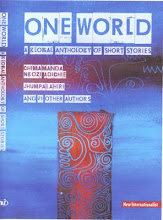
Thanks to the generosity, hard work and passion of the writers and teachers below, the final manuscript of SHORT CIRCUIT finally went to Salt Publishing this week.
It’s taken six months of hard graft, during which it has been well nigh impossible to write much fiction myself… it was as though that side of my brain had closed down. But thankfully, due largely to the buzz of the Fiction Workhouse, I’ve managed to keep some level of creativity up, and hope to return to normal form very soon.
In these pages are generous chapters from some of the strongest writers of short fiction I could find.
In terms of major awards, this team have among others, won the folllowing:
The National Short Story Award, 6 Bridport Prizes, 3 Fish Prizes, 2 Commonwealth Awards, the Asham Award, Pen MacMillan Silver Pen Award, Writers’ inc Writer of the Year.
When you are asked to source the content, contribute yourself, and edit a book like this, it would be easy to close down under the weight of responsibility. Responsibility to Salt, who are just fantastic and dedicated and who are throwing themselves behind this book (born out of a conversation in Cork last year), responsibility to the aspiring writers who may pick up this book in the hope that it will help them on their way… but also a responsibility to myself… I was NOT prepared to fail on this one. Also, I decided not to source all the major chapters from Salt writers, over half had to be with other publishers.
It took a few days of thinking, in a mild state of panic, back in September, when Salt gave me this commission. And I came to the conclusion that the best way to approach the book was to create the book I would have loved to have myself, when I was a relative newbie writer.
I didn’t want to be talked down to. I didn’t want the very basic things you can learn anywhere, fast. I wanted in-depth discussion of the individual craft elements set in context – within a close look at the creative practices of successful writers of short fiction including many very successful teachers of writing.
I did not just want theory (although there is a place for that, and theory can be found in many many places.) I wanted to read chapters from writers prepared to analyse their own working practices, their own creative inspirations.
It is astounding how much generosity these writers have, their willingness to share with each other, their willingness to share with those starting out.
What I have created is the book I’d have loved back then, but also a book I will love now. Where I can find the companionship of other writers sharing their creative thoughts. I will find writing exercises for when I need to stretch myself and try different things. I will find list upon list of inspirational short stories, stories that have planted seeds in the spirits of all these superb writers.
Twenty four writers. In-depth chapters in the form of essays, two interviews with Tobias Hill and Clare Wigfall (that was fun to do - hours on the phone, talking writing with two great people, great writers. What an excuse!) And a buzzy 'epilogue' from six Salt writers.
I know Salt are busy creating the cover, and as soon as that is done, I will upload it here. Meanwhile, thank you to Jen Hamilton-Emery for giving me this project. It’s been exciting, amazing and exhausting!
Below are the contents, with links to the writers.
CONTENTS
Introduction:
Graham Mort: Finding Form in Short Fiction
Clare Wigfall: “I Hear Voices”: Voice and building character
Alison MacLeod: Writing and Risk-Taking
Nuala Ni Chonchuir: Language and Style
Chika Unigwe: Settings. A Sense of Place.
Alex Keegan: Understanding Earthquakes. The Importance of Theme.
Lane Ashfeldt: Building a World
Adam Marek: What my gland wants. Originality in short fiction.
Catherine Smith: Myth and Imagination.
Tobias Hill: Character, dialogue, and much more.
Sarah Salway: Stealing Stories.
Elizabeth Baines: True Story, Real Story – Good Fiction?
Tania Hershman: Art Breathes from Containment
David Gaffney: Get Shorty. The micro-fiction of Etgar Keret.
Marian Garvey: On Intuition. Writing into the Void.
Elaine Chiew: Endings
Paul Magrs: Thoughts on Writing Fiction, at the End of Term
Vanessa Gebbie: i) Leaving the door ajar: Opening the short story
ii) Hard Work, Persistence, Luck and a Bowl of Fruit. The Short Story Competition game.
Epilogue: Some final thoughts:
Linda Cracknell,
Carys Davies,
David Grubb, Zoe King, Matthew Licht, Jay Merrill.
Showing posts with label Paul Magrs. Show all posts
Showing posts with label Paul Magrs. Show all posts
Thursday, 14 May 2009

Monday, 16 February 2009
NEW GUIDE TO THE CRAFT OF THE SHORT STORY
This has been my job for the last few months- cajoling and persuading some of the best writers of short stories around to contribute to a forthcoming guide to be published by SALT on writing the short story.
I have fourteen superb writers. And as their chapters come in to me, I shall reveal who they are:
First off the chocks is GRAHAM MORT
Graham won First Prize at Bridport in 2007. A widely published short story writer, he is also a much published poet. He lives in North Yorkshire and lectures in Creative Writing at Lancaster University where he directs the Centre for Transcultural Writing and Research. He has worked extensively in Africa, designing and implementing literature development projects for the British Council. His latest publication will be a collection of short fiction forthcoming this year from Seren.
In second place, hot on Graham's heels is PAUL MAGRS Paul is Senior Lecturer in English Literature and Creative Writing at Manchester Metropolitan University. He's also taught at the University of East Anglia. His first published writing was the short story "Patient Iris", published 1995 in New Writing Four (edited by A. S. Byatt and Alan Hollinghurst). This was soon followed by his debut novel, Marked for Life, the same year. Other novels include Strange Boy (2003) and To the Devil — a Diva! (2004) and he has also published collections of short fiction. He is also the author of four books in the BBC Doctor Who novel range, and co-authored the Creative Writing handbook, with Andrew Motion and Julia Bell.
In third place in my postbox - I have just seen the chapter from ELAINE CHIEW - fabulous stuff. Elaine won the Bridport Prize in 2008. Elaine is certanly a name to watch! Her publications include Hobart, Storiglossia, Night Train, and the forthcoming One World Anthology.
Me? I am Editor, contributor, project-manager, general dogsbody, and occasional interviwer over the phone.
I have fourteen superb writers. And as their chapters come in to me, I shall reveal who they are:
First off the chocks is GRAHAM MORT
Graham won First Prize at Bridport in 2007. A widely published short story writer, he is also a much published poet. He lives in North Yorkshire and lectures in Creative Writing at Lancaster University where he directs the Centre for Transcultural Writing and Research. He has worked extensively in Africa, designing and implementing literature development projects for the British Council. His latest publication will be a collection of short fiction forthcoming this year from Seren.
In second place, hot on Graham's heels is PAUL MAGRS Paul is Senior Lecturer in English Literature and Creative Writing at Manchester Metropolitan University. He's also taught at the University of East Anglia. His first published writing was the short story "Patient Iris", published 1995 in New Writing Four (edited by A. S. Byatt and Alan Hollinghurst). This was soon followed by his debut novel, Marked for Life, the same year. Other novels include Strange Boy (2003) and To the Devil — a Diva! (2004) and he has also published collections of short fiction. He is also the author of four books in the BBC Doctor Who novel range, and co-authored the Creative Writing handbook, with Andrew Motion and Julia Bell.
In third place in my postbox - I have just seen the chapter from ELAINE CHIEW - fabulous stuff. Elaine won the Bridport Prize in 2008. Elaine is certanly a name to watch! Her publications include Hobart, Storiglossia, Night Train, and the forthcoming One World Anthology.
Me? I am Editor, contributor, project-manager, general dogsbody, and occasional interviwer over the phone.
Subscribe to:
Posts (Atom)



.JPG)